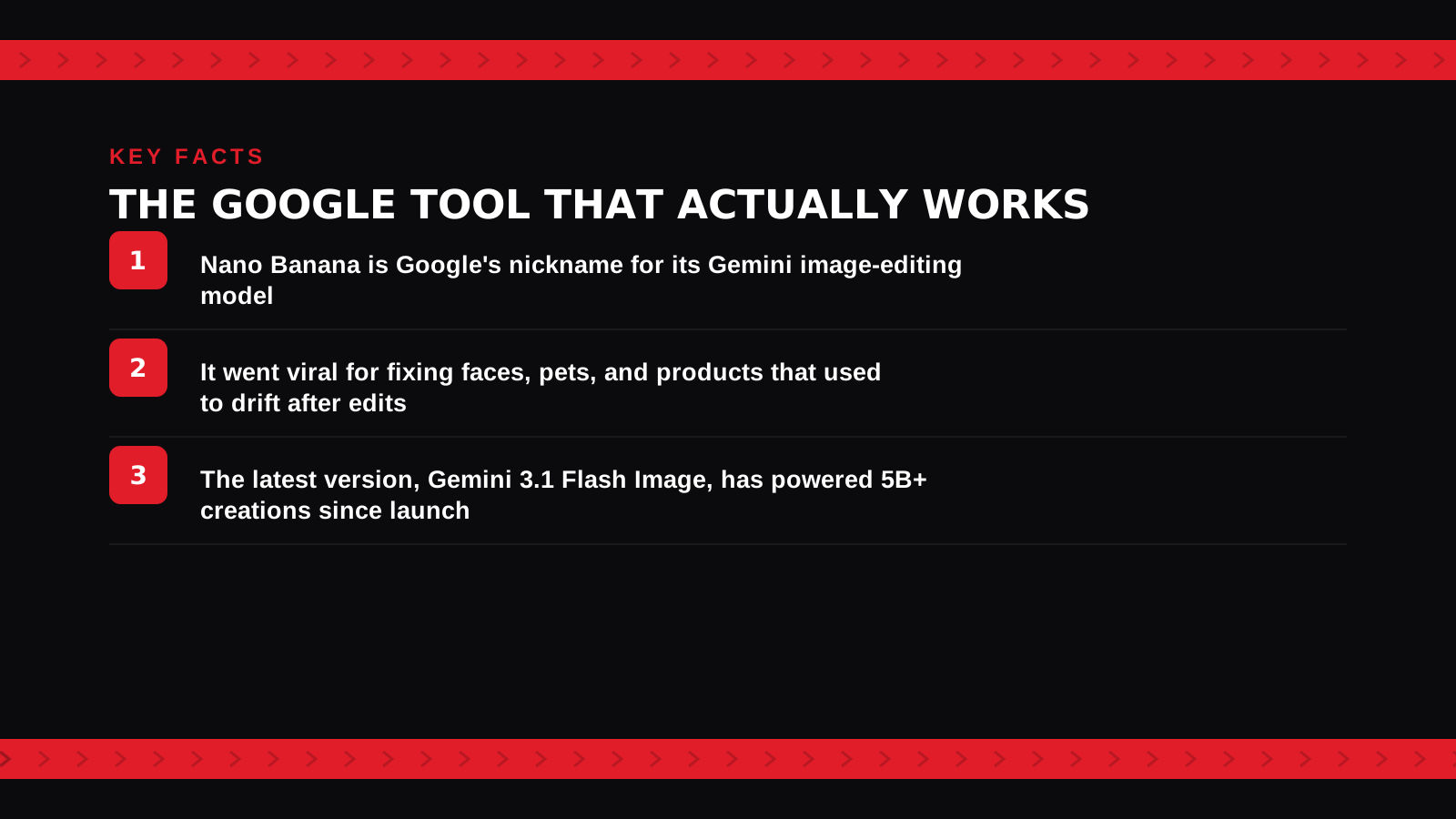
Nano Banana is the nickname that stuck for Google's Gemini image-editing model, and it went viral for a genuinely unusual reason: it actually worked. Most AI image tools go viral for spectacular failures — Nano Banana spread because it quietly fixed the specific problems creators had already learned to just live with. Here's what it actually does differently, and where to use it.
What Nano Banana actually fixes
Ask most AI image editors to make a small change — swap a background, adjust lighting, add an object — and something else quietly breaks. A face drifts slightly out of likeness. A pet becomes a slightly different pet. A product's shape shifts by a few degrees. After a second or third edit pass, the useful details are often gone entirely.
Nano Banana was built to process text and images together from the ground up, which is the specific technical choice that made it good at holding an existing image's identity through an edit rather than regenerating something close-but-wrong. That's the whole pitch: not flashier generation, just edits that keep the parts you didn't ask it to change actually unchanged.
From viral moment to Nano Banana Pro
The original model landed in the Gemini app in August 2025 and built its reputation on exactly that identity-preservation behavior. The current version goes further under the name Gemini 3.1 Flash Image, combining Gemini Flash's speed with reasoning and world-knowledge quality that used to be reserved for the slower Pro tier. Since that update, the image model inside the Gemini app has powered more than 5 billion creations — a scale that puts it well past most dedicated image-editing apps, despite being a feature inside a broader assistant rather than a standalone product.
Where it actually wins
Nano Banana wins specifically on edit consistency — the exact case where cheaper or older tools visibly fall apart: touching up a product photo without the product subtly changing, adjusting a portrait without the person starting to look like someone else, or restyling a pet photo without the pet becoming unrecognizable. It's less differentiated for pure text-to-image generation from scratch, where several other models are comparably strong; the identity-preservation-through-edits case is where the gap is most obvious.
Which one should you use?
Open Gemini and use the image tools built into the app if your job is editing an existing photo and keeping it recognizable afterward — that's the specific strength this model earned its reputation on. If you're generating images from scratch with no existing reference to preserve, the choice is more open between several capable models, and Nano Banana's advantage matters less.
FAQ
Is Nano Banana a separate app from Gemini? No — it's the image generation and editing model built into the Gemini app, not a standalone product with its own login or subscription.
Why does everyone call it "Nano Banana" instead of its real name? The nickname caught on during the model's original viral spread in 2025 and stuck through name changes (Gemini 2.5 Flash Image, then Gemini 3.1 Flash Image) — it's become the informal brand people search for even as Google's official naming has moved on.
Is it free to use? It's included with Gemini's existing free and paid tiers rather than sold as a separate product — check the current Gemini plan details for any generation limits on the free tier.
Related guides
*News and product details reviewed as they change. Last updated August 2026.*
Bogdex · Founder & editor, woska
Bogdex builds and curates woska, testing AI tools against real workflows to judge which ones actually save time rather than which have the longest feature list.