Notion AI wins if you want to design your own second brain — linked databases for projects, areas, and resources, with AI search and agents layered on top. Tana wins if you'd rather the system build itself from what you actually do, treating meetings and work as connected, typed context instead of notes you have to file. Mem.ai wins if the whole point is that useful context resurfaces on its own, without you managing folders at all. The 2026 shift that matters: your notes now have a second audience beyond you — the AI you point at them — and each of these three handles that differently.
Where each one actually wins
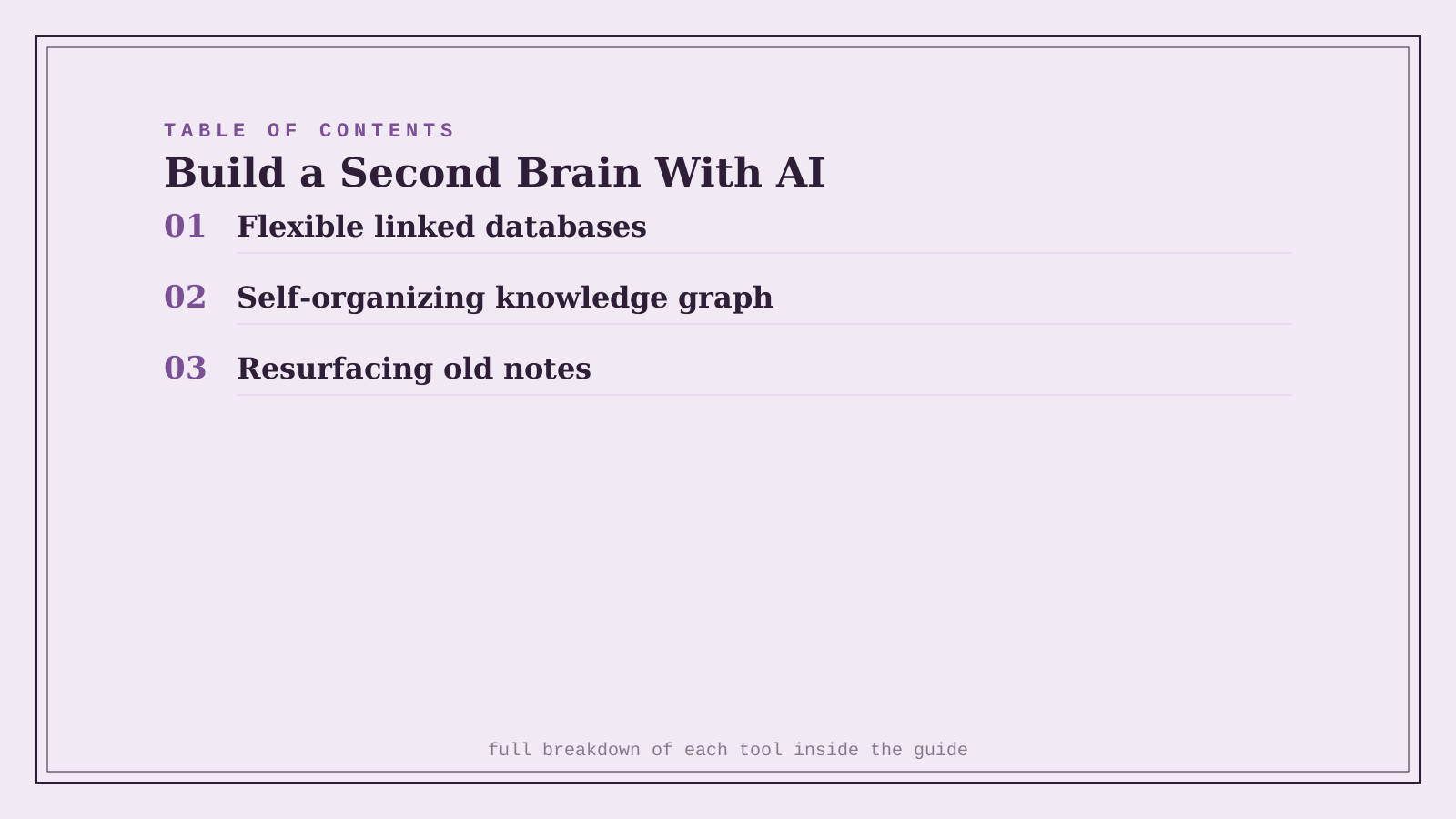
Notion AI is the most flexible of the three — a classic second-brain setup is a handful of linked databases (inbox, projects, areas, resources) with dashboards and views you design yourself. Its 2026 AI features add natural-language search across the whole workspace, summarization, and agents that can act on rules you set, without forcing you into a fixed structure.
Tana takes the opposite philosophy: it builds the brain from what you do rather than what you file. Every piece of information becomes a typed node in a network, staying connected and current automatically, and it's explicitly open to AI agents querying it — the upkeep doesn't fall on you the way it does with a manually-maintained Notion setup.
Mem.ai organizes notes and personal knowledge so useful context resurfaces without manual folder management — closer to a research assistant that's read everything you've saved and can tell you what's relevant to what you're working on right now, rather than a database you query yourself.
Quick comparison
| Tool | Structure | Starting price | Best fit |
|---|---|---|---|
| Notion AI | You design the databases | $10/mo | Wants full control over structure |
| Tana | Builds itself from your work | Freemium | Doesn't want to maintain a filing system |
| Mem.ai | Resurfaces context automatically | $14/mo | Wants relevant notes to just appear |
Which one should you actually build on?
Build on Notion AI if you already have (or want) a workspace shared with a team, not just yourself — the same system doubles as your team wiki. Choose Tana if the idea of manually filing every note already sounds like a project you'll abandon in three weeks. Pick Mem.ai if the actual goal is "stop losing good ideas," not building an elaborate personal database.
FAQ
Do I need to migrate all my old notes to switch to one of these? Not necessarily — most people start a second brain fresh and let old notes stay wherever they are, migrating only what's still actively useful rather than trying to import everything on day one.
Is a second brain overkill if I just use a to-do list today? If your current problem is losing track of ideas, context, and decisions — not just tasks — a second brain solves a different problem than a to-do list does. If tasks are genuinely your only issue, see our time-blocking comparison instead.
Can Tana or Mem.ai replace Notion entirely for a team? Tana is increasingly built for shared, team-visible knowledge; Mem.ai leans more personal. Notion AI remains the safest choice specifically when the "brain" needs to be a team wiki, not just yours.
Does any of these actually work well with an AI assistant like ChatGPT or Claude? Yes — all three are explicitly designing for the "notes have a second audience" shift, meaning your knowledge base is meant to be queried by an AI agent, not just searched by you. Depth of that integration varies and is worth testing directly before committing.
Related guides
- Best AI Tool for Time Blocking and Weekly Planning in 2026
- Notion AI vs Perplexity: Which One Should Run Your Research Workflow in 2026?
- Part of our complete guide: AI Productivity & Personal Tools
- Explore Productivity tools
*Ratings and pricing reviewed monthly. Last updated August 2026.*
Bogdex · Founder & editor, woska
Bogdex builds and curates woska, testing AI tools against real workflows to judge which ones actually save time rather than which have the longest feature list.