Google Veo is the strongest pick for realism and camera work, Runway is the strongest pick for brand-safe marketing and ad production, and Kling is the strongest pick on price — and Sora isn't on this list because OpenAI shut it down in 2026. If you've seen Sora mentioned in an older "best AI video generator" roundup, that comparison is now out of date in a way that actually matters for anyone about to build a workflow around it.
First: what happened to Sora
OpenAI discontinued Sora's web and app experiences in April 2026, with the API following in September 2026, after the product turned out to cost far more to run than it earned back and active usage fell sharply. If you were planning a workflow around Sora, or you're reading an older comparison that assumes it's still available, treat that plan as dead and move to one of the three tools below instead.
Where Veo wins
Veo, built into the Gemini app, produces the most consistently realistic output of the three: natural scenes, believable physics on fabric and hair, and strong camera-move prompt adherence. It's the safer enterprise pick if the bar is "does this look real" rather than "can I iterate on it fast and cheap."
Where Runway wins
Runway is built for marketers and production teams, not just realism: reference-image controls, a Motion Brush for directing movement, and character-consistency tools that matter when you need the same product or presenter across multiple clips. For advertising and brand content specifically, the editor and control layer matter more than squeezing out slightly more photorealism.
Where Kling wins
Kling is the value play: strong realistic motion and a clean multi-shot storyboard mode, at a meaningfully lower cost per second of generated video than Veo or Runway. For social content, UGC-style ads, and any workflow where you're generating a high volume of short clips, Kling's price-to-quality ratio is hard to match.
Quick comparison
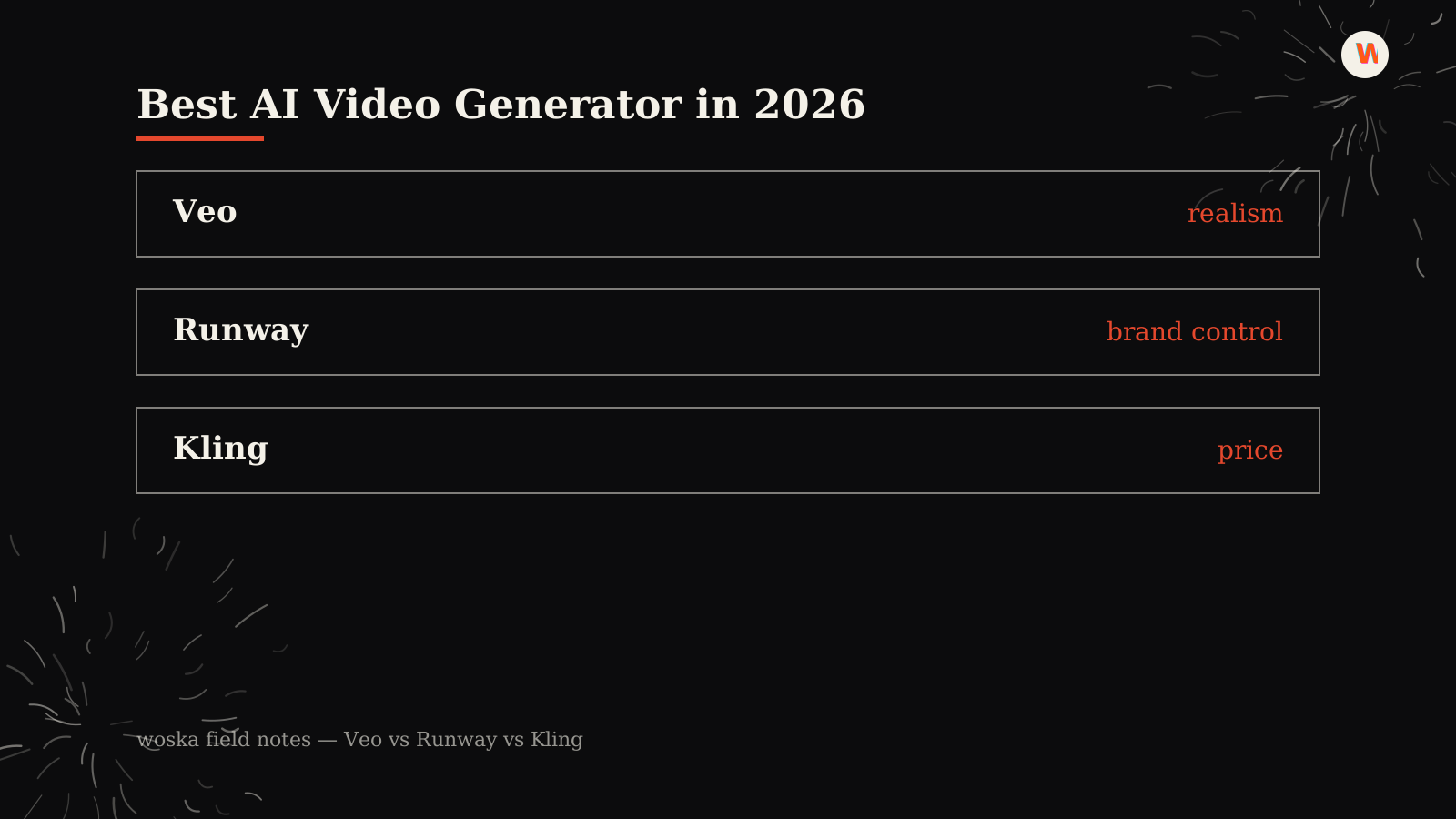
| Tool | Starting price | Core job | Best fit |
|---|---|---|---|
| Veo | Usage-based | realistic video generation | Enterprise, realism-first work |
| Runway | From $15/mo | controllable generative video | Marketing, brand-safe ads |
| Kling AI | From $0/mo | fast, cheap video generation | High-volume social content |
Which one should you use?
Choose Veo when the output needs to look as close to real footage as possible and cost per clip is secondary. Choose Runway when you need control, consistency, and an editor built for iterating on brand content. Choose Kling AI when you're generating a lot of short clips and cost per generation is the deciding factor.
FAQ
Can I still use Sora if I already have content in it? Export anything you need before OpenAI's shutdown deadlines — the web and app are already discontinued, and the API follows in September 2026. Don't build any new workflow around it.
Which tool is best for realistic human motion specifically? Kling is frequently cited as the strongest on natural human motion, with Veo close behind on overall scene realism, including fabric and hair physics.
Is there a free way to test these before committing? Kling has the most usable free tier of the three for testing quality before paying. Runway also offers a free trial tier; Veo access typically runs through a paid Gemini plan.
Related guides
- 5 AI Photo & Video Apps Built for the iPhone 18 Pro Max's New Camera
- HeyGen vs Synthesia
- Top 3 AI Tools for Video Editing
- Explore Video tools
*Ratings and pricing reviewed monthly. Last updated July 2026.*
Bogdex · Founder & editor, woska
Bogdex builds and curates woska, testing AI tools against real workflows to judge which ones actually save time rather than which have the longest feature list.