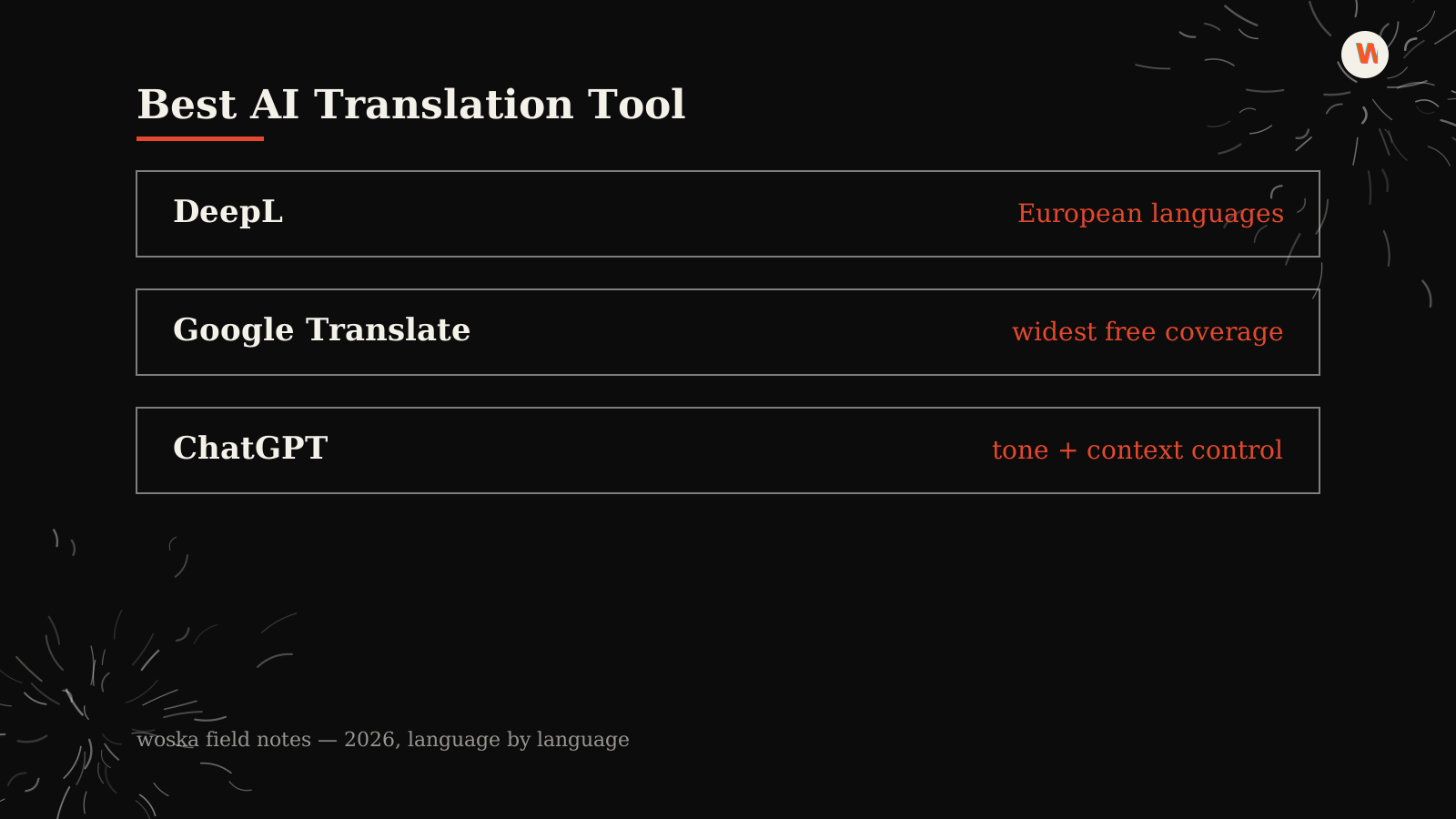
DeepL is the best pick for fluent, nuanced translation of major European languages, Google Translate is the best pick for free coverage across the widest range of languages, and ChatGPT is the best pick when tone, context, or a glossary actually matter. There is no single winner in 2026 — the honest answer is that the right tool depends on the language pair and how much the wording needs to sound like a person wrote it.
Where DeepL wins
DeepL consistently produces the most fluent translations for major European language pairs — German, French, Spanish, Dutch — and preserves document formatting well enough that it's the strongest choice for translating full documents, not just snippets.
Where Google Translate wins
Google Translate covers more languages than any other major tool, for free, which makes it the default for quick, non-critical translation — a menu, a message, a webpage — where speed and coverage matter more than polish.
Where ChatGPT wins
ChatGPT (and Claude) edge ahead on Asian languages and on anything that needs tone control, context, or a consistent glossary across a document — client-facing emails, marketing copy, brand voice. Use it when the translation needs to read like it was written by a person who knows your business, not just a person who knows the language.
Quick comparison
| Tool | Starting price | Core job | Best fit |
|---|---|---|---|
| DeepL | From $0/mo | Document-quality machine translation | European language pairs |
| Google Translate | Free | Broadest language coverage | Quick, non-critical translation |
| ChatGPT | From $0/mo | Context and tone-aware translation | Client-facing, brand-voice copy |
Which one should you use?
Use DeepL as the default for European-language documents. Use Google Translate for a fast, free translation of something low-stakes. Use ChatGPT when the output needs to sound like your brand, not just be technically correct — and consider running important copy through more than one tool before it goes external.
FAQ
Is machine translation good enough to publish without a human review? For internal or low-stakes use, often yes. For anything client-facing, legal, or brand-critical, a human fluent in the target language should still review it — machine translation is a strong first draft, not a final sign-off.
Which tool handles Asian languages best? ChatGPT and Claude generally edge ahead of DeepL and Google Translate for Chinese, Japanese, and Korean, particularly where context and nuance matter.
Is there a practical stack instead of picking just one? Yes — many teams use DeepL or Google Translate for the first pass and ChatGPT to refine tone on anything important, adding a dedicated localization platform only once multilingual work becomes a recurring system.
Related guides
*Ratings and pricing reviewed monthly. Last updated August 2026.*
Bogdex · Founder & editor, woska
Bogdex builds and curates woska, testing AI tools against real workflows to judge which ones actually save time rather than which have the longest feature list.