ChatGPT is the fastest way to turn a list of someone's accomplishments and qualities into a structured first draft. Claude tends to sustain specific, concrete praise better across a full page rather than drifting into generic phrases like "a pleasure to work with." Grammarly's job is catching the generic filler — vague enthusiasm without specifics — before the letter goes out, since that's exactly what makes a recommendation letter forgettable. A recommendation letter's entire value is specificity: what did this person actually do, and how do you know. AI can draft the structure fast, but it only produces a strong letter if you feed it real, specific detail first.
Where each one actually wins
ChatGPT takes a rough list — projects, specific wins, qualities you want to highlight — and drafts a structured letter fast. It's the right starting point when you need something usable quickly and already know exactly what you want to say about the person.
Claude is worth the extra time when the letter matters a lot — a competitive grad program, a senior role — since it more reliably sustains specific, concrete claims across a full page instead of the letter gradually softening into generic praise by the third paragraph.
Grammarly catches the failure mode both other tools can still produce: technically correct sentences that say nothing specific. Run any AI-drafted recommendation letter through it and read for phrases that could describe literally anyone — those are the sentences to rewrite or cut.
Quick comparison
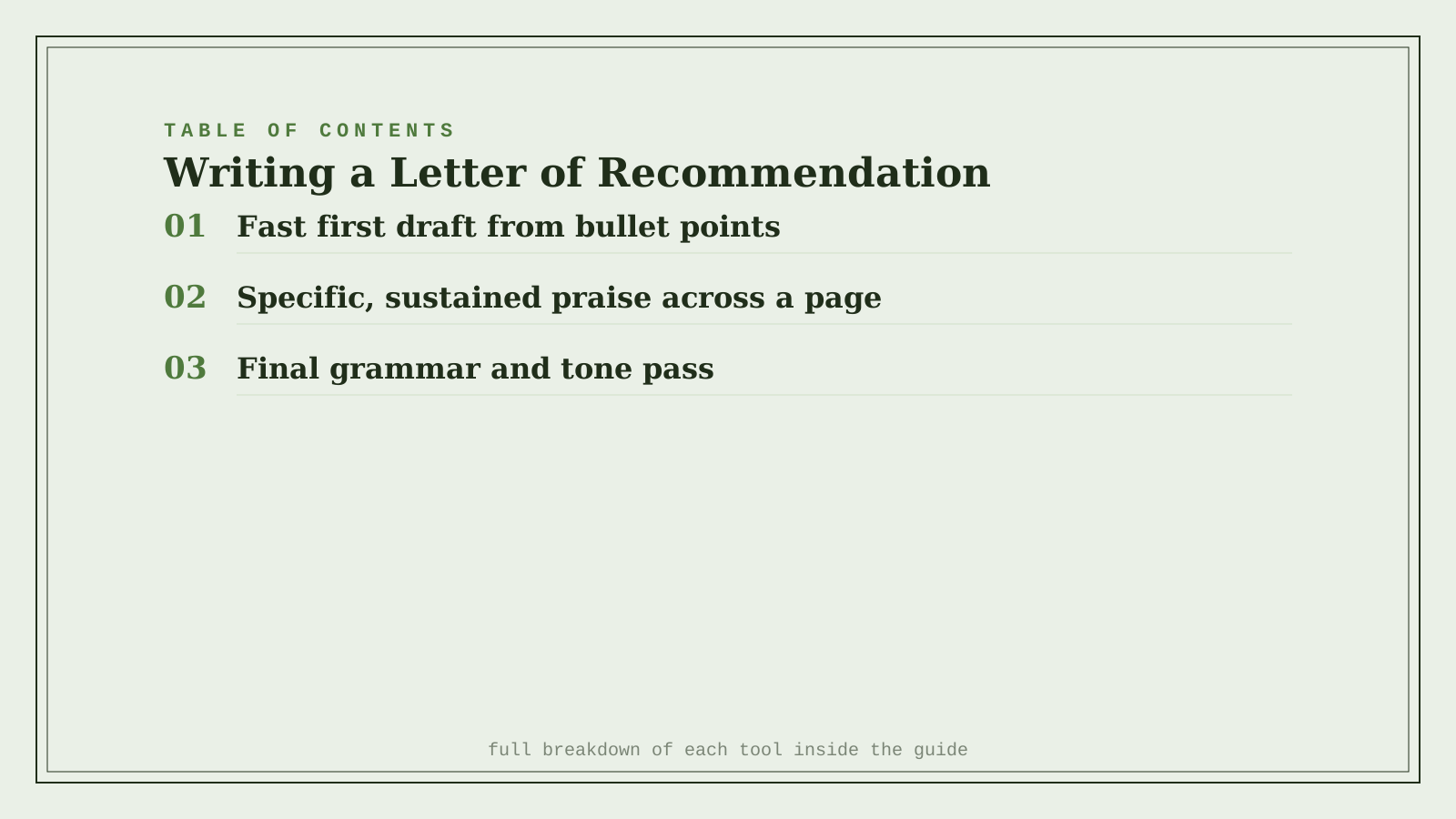
| Tool | Core job | Starting price | Best fit |
|---|---|---|---|
| ChatGPT | Fast draft from bullet points | Freemium | Quick, straightforward recommendations |
| Claude | Specific praise sustained across a page | Freemium | High-stakes letters that need real weight |
| Grammarly | Catching generic filler | Freemium | The pass every letter should get before sending |
The one input that decides whether this works
Before prompting any tool, write down three to five specific things the person actually did — a project, a moment they handled something well, a measurable outcome. A letter built from specifics reads as genuine regardless of which AI tool drafted it; a letter built from adjectives ("hardworking," "reliable," "a pleasure") reads as generic no matter how well-written the sentences are.
FAQ
Is it appropriate to use AI to write a letter of recommendation? Check your institution or organization's policy first — some explicitly prohibit AI-assisted recommendation letters, while many others are fine with AI as a drafting aid as long as a human reviews and takes ownership of the final content and its accuracy.
Can AI make up specific accomplishments if I don't give it enough detail? It can generate plausible-sounding but generic or even fabricated specifics if the prompt is too vague — never let an AI tool invent details about a real person's work; only use specifics you can personally verify.
How long should a letter of recommendation actually be? One page is standard for most purposes — resist the temptation to let AI pad it longer; a focused page with real specifics outperforms two vague pages every time.
Should the person I'm recommending see the letter before I send it? Practice varies by context — some processes require a confidential letter you don't share, others are fine with the candidate reviewing it. Check the specific requirement before drafting, since it can affect what you're comfortable putting in writing.
Related guides
- Best AI Tool for Writing a Resignation Letter in 2026
- Best AI Tool for Writing a Performance Self-Review in 2026
- Best AI Tool for College Application Essays in 2026
- Explore Writing & Content tools
*Ratings and pricing reviewed monthly. Last updated August 2026.*
Bogdex · Founder & editor, woska
Bogdex builds and curates woska, testing AI tools against real workflows to judge which ones actually save time rather than which have the longest feature list.