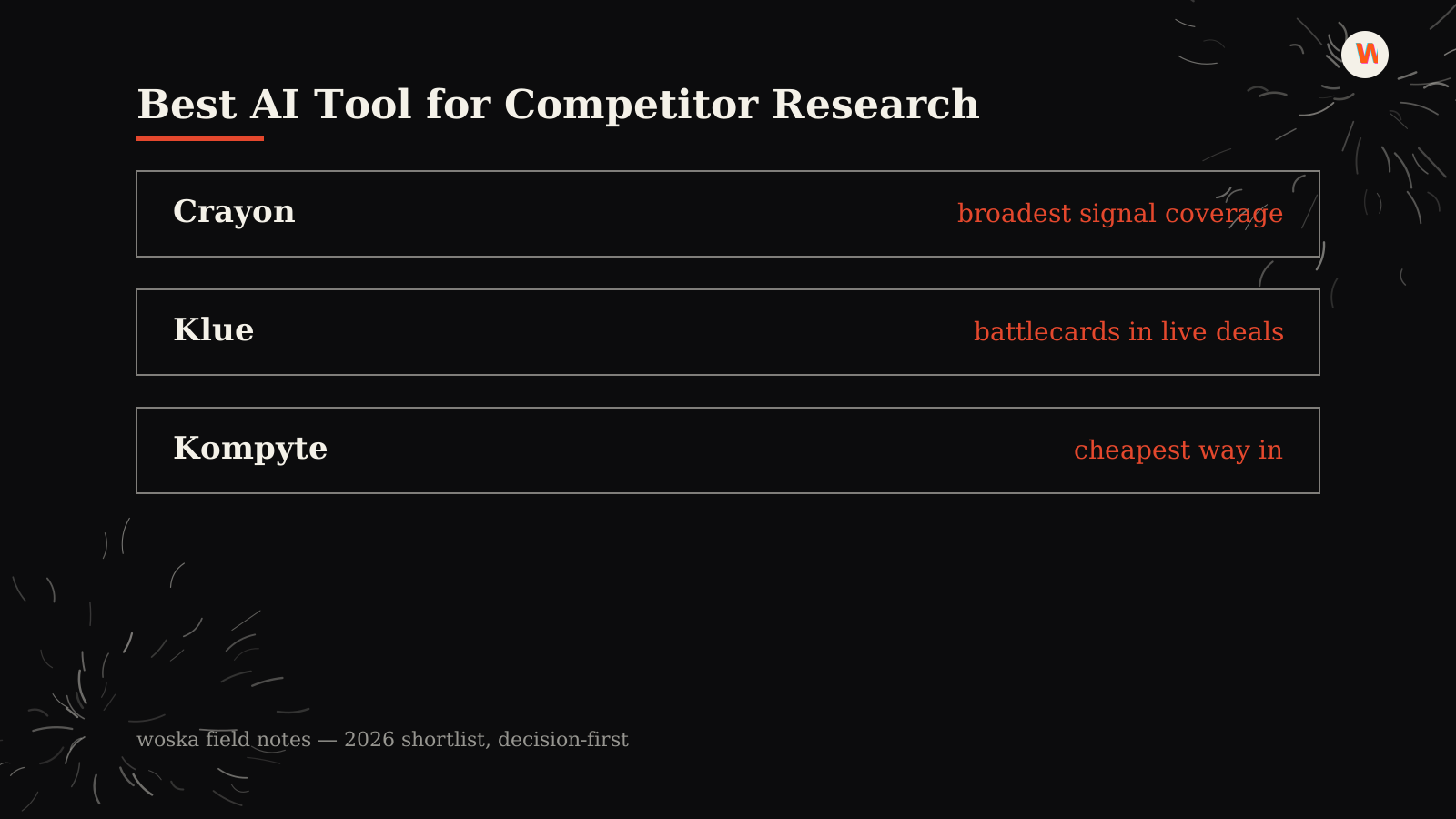
Crayon is the best pick for monitoring the widest range of competitor signals, Klue is the best pick when that intelligence needs to reach sales reps inside live deals, and Kompyte is the best pick if budget is the deciding factor. All three watch competitors automatically instead of someone manually checking pricing pages and job boards every week — the difference is who the output is built for.

Where Crayon wins
Crayon tracks the broadest range of competitor changes — website edits, pricing, job postings, news — and turns them into shareable alerts across a team. It's the strongest fit for marketing-led competitive intelligence, where the goal is staying current on everything a competitor does, not just what affects one deal.
Where Klue wins
Klue is built around sales enablement specifically: battlecards that route straight into the deals where they matter, so a rep facing a specific competitor gets the right talking points without digging through a wiki. If competitive intel needs to change how sales reps talk on calls, not just what marketing knows, Klue is the stronger fit.
Where Kompyte wins
Kompyte covers real-time website monitoring and automated battlecards at a meaningfully lower starting cost than Crayon or Klue. For a smaller team that wants the core of competitive intelligence — alerts and battlecards — without an enterprise contract, this is the realistic starting point.
Quick comparison
| Tool | Starting price | Core job | Best fit |
|---|---|---|---|
| Crayon | Custom pricing | Broad competitor monitoring | Marketing-led competitive intel |
| Klue | Custom pricing | Sales battlecards | Intel inside live deals |
| Kompyte | From $300/yr | Monitoring + battlecards | Smaller teams, tighter budget |
Which one should you use?
Choose Crayon if you need the widest possible signal coverage across competitors. Choose Klue if the real goal is changing what sales reps say on calls. Choose Kompyte if you want the core of competitive intelligence without an enterprise-size budget.
FAQ
Do I need a dedicated tool, or can I just Google competitors occasionally? Manual checks work until a competitor changes pricing or messaging between checks and nobody notices for weeks. A dedicated tool exists specifically to close that gap automatically.
Is competitive intelligence only useful for sales teams? No — marketing, product, and leadership all use it differently. Sales wants battlecards for deals; marketing wants positioning and messaging shifts; product wants feature and pricing moves.
How much does enterprise competitive intelligence typically cost? Dedicated platforms like Klue and Crayon commonly run five figures a year for a real deployment, which is why Kompyte's lower starting price matters for smaller teams.
Related guides
- How Sales Teams Turn Competitor Intel into Battlecards in 2026
- Part of our complete guide: AI Tools for Marketing Teams
- Explore Research & Data tools
- Best AI Tool for Sales Call Analysis
- All woska guides
*Ratings and pricing reviewed monthly. Last updated August 2026.*
Bogdex · Founder & editor, woska
Bogdex builds and curates woska, testing AI tools against real workflows to judge which ones actually save time rather than which have the longest feature list.