ChatGPT drafts a clear, structured complaint letter fastest — describe what went wrong (a delayed delivery, a billing error, a service failure) and it returns a polite, structured letter ready to edit and send. Claude tends to hold a firmer, more assertive tone across a longer or more complicated dispute without tipping into aggressive language, which matters when the letter needs real leverage, not just politeness. Grammarly's job is making sure the final version reads as measured and professional — a complaint letter that sounds too angry gets dismissed regardless of how legitimate the underlying issue is. Since everything you want to say is already clear in your own head, the job here is genuinely extraction and structuring, which AI does fast — the substance and the facts still have to be entirely accurate and yours.
Where each one actually wins
ChatGPT is the fastest path to a usable draft for most everyday disputes — a wrong charge, a late delivery, a product that didn't match its description. Give it the specific facts and the outcome you want, and it returns a clear, polite, structured letter in one pass.
Claude is worth the extra step for a more serious or higher-stakes dispute — a significant billing error, a service failure with real financial impact — where the letter needs to be firmer and more assertive about the specific resolution you expect, without crossing into language that undermines your credibility.
Grammarly is the check before sending: read the AI-drafted letter specifically for tone that reads as angrier or more aggressive than intended. A company representative is more likely to actually help when a complaint reads as reasonable and specific rather than emotional, even when the underlying frustration is completely justified.
Quick comparison
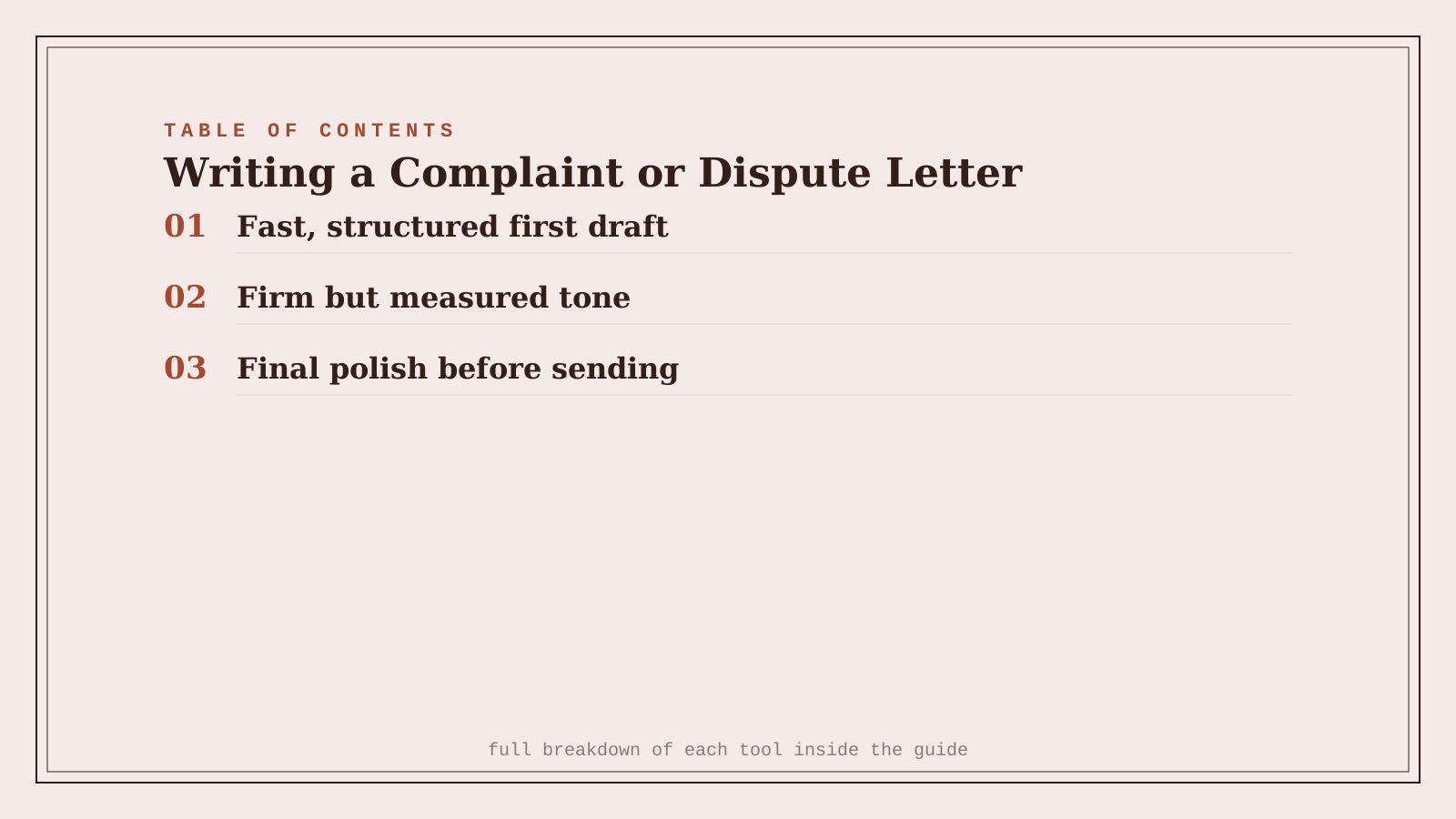
| Tool | Core job | Starting price | Best fit |
|---|---|---|---|
| ChatGPT | Fast draft for everyday disputes | Freemium | Most complaints — billing errors, delays, service issues |
| Claude | Firmer, more assertive tone | Freemium | Higher-stakes or more serious disputes |
| Grammarly | Tone check before sending | Freemium | Every complaint letter, as the final step |
What to include, regardless of which tool drafts it
Give the AI tool the specific facts: dates, amounts, order or account numbers, and exactly what resolution you're asking for (a refund, a replacement, a specific fix) — a letter that clearly states the desired outcome gets a faster, more useful response than one that only describes the problem. Always verify every fact and figure in the AI-drafted version yourself before sending; an AI tool can format your complaint clearly, but it can't verify your order number or the amount you were overcharged.
FAQ
Should I be cautious about apps that claim to fully automate consumer disputes and refunds for me? Yes — some AI-branded consumer-dispute services have faced real regulatory action (including FTC enforcement) for overstating what the service actually does, and none can substitute for your own judgment about a dispute's facts. Using a general-purpose AI tool to draft a letter you review and send yourself carries none of that risk.
Is a formal written complaint actually more effective than calling customer service? Often yes for anything beyond a quick fix — a written complaint creates a paper trail, is harder to dismiss verbally, and can be escalated (to a manager, a regulator, a card issuer for a chargeback) if the first response is inadequate, which a phone call alone doesn't provide.
How firm is too firm in a dispute letter? State facts and the specific resolution you want clearly and without hedging, but avoid personal attacks, threats, or language that sounds unhinged rather than reasonable — a firm, factual letter gets taken seriously; an angry one often gets deprioritized regardless of how valid the complaint is.
Should I send the letter by email, mail, or both? For anything with real financial stakes, sending by both a trackable method (certified mail) and email creates a stronger record than either alone — check what the company's dispute process specifically requires, since some have a designated channel that gets priority handling.
Related guides
- Best AI Tool for Writing a Resignation Letter in 2026
- Best AI Tool for Writing a Performance Self-Review in 2026
- Explore Writing & Content tools
*Ratings and pricing reviewed monthly. Last updated August 2026.*
Bogdex · Founder & editor, woska
Bogdex builds and curates woska, testing AI tools against real workflows to judge which ones actually save time rather than which have the longest feature list.