A customer who opens a ticket asking "can I do X?" and gets told "not on your current plan" has just told you exactly what they'd pay more for — a genuine, self-identified upsell signal that usually just gets logged as a resolved ticket and forgotten. Zendesk AI wins for catching that signal: an AI layer inside Zendesk for ticket triage and agent copilot suggestions across a large integration ecosystem. Salesforce Einstein wins for turning it into something a revenue team actually acts on — lead scoring and generative assistance built directly into the CRM a sales or customer success rep already works from every day. Instead of a plan-limit question disappearing into the support queue, it becomes a flagged opportunity.
The two, in one line each
Zendesk AI is an AI layer inside Zendesk for ticket triage, agent copilot suggestions, and automated replies across a large integration ecosystem.
Salesforce Einstein is an enterprise CRM AI layer for lead scoring, forecasting, and generative assistance built into the Salesforce platform.
Where each one actually wins
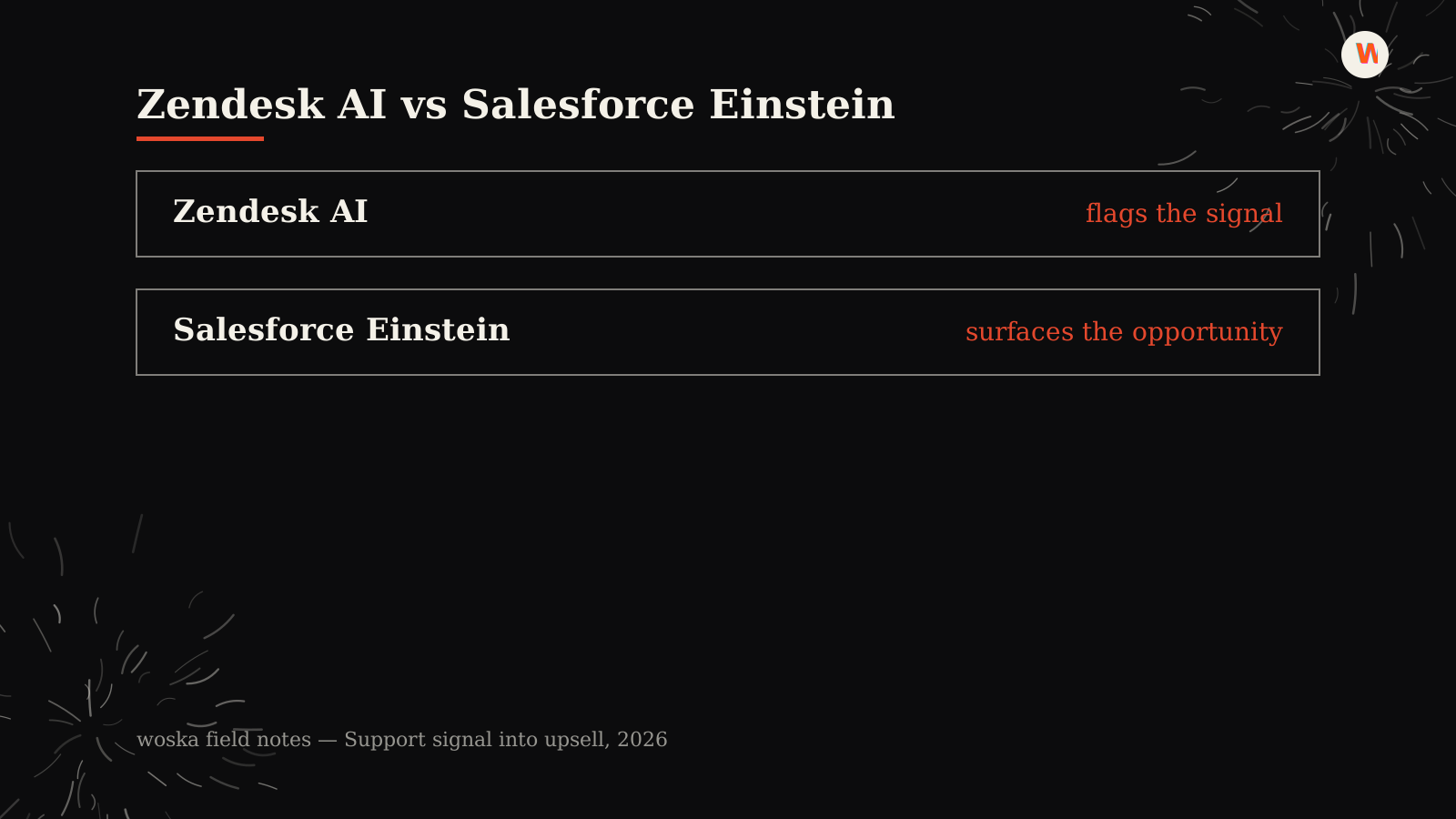
Zendesk AI wins at the point where the signal actually exists — a ticket asking about a feature outside the customer's current plan, or a repeated question about usage limits, is a pattern its ticket triage and agent-facing suggestions can flag consistently, rather than relying on individual support agents to notice and manually report it to sales. Salesforce Einstein wins at making that flagged signal usable by the people who can act on it — surfacing it as a scored opportunity inside the CRM record a sales or success rep is already looking at, so the upsell conversation happens as a natural next step instead of a separate handoff that depends on someone remembering to make it.
Quick comparison
| Tool | Core strength | Starting price | Best fit |
|---|---|---|---|
| Zendesk AI | Flags upsell signals inside support tickets | Custom pricing | Catching the signal where it originates |
| Salesforce Einstein | Surfaces it as an opportunity inside the CRM | Custom pricing | Getting it in front of the team that can act |
Which one should you use?
Use Zendesk AI to flag patterns in support tickets that indicate real upsell interest. Use Salesforce Einstein to route that signal into your CRM as an actual opportunity a sales or success rep can act on.
FAQ
Doesn't this risk making support feel like a sales channel to customers? Handled well, it shouldn't — the support interaction itself stays focused on resolving the customer's actual question; the upsell signal is used afterward by a different team, not injected into the support conversation itself.
What kind of support tickets are the strongest upsell signals? Questions about hitting a usage or seat limit, asking whether a higher tier includes a specific feature, or requesting something explicitly gated behind a paid plan are typically the clearest and highest-intent signals.
Do I need both Zendesk and Salesforce specifically, or does this work with other platforms? The workflow principle — catch the signal in support, surface it in the CRM — applies with other helpdesk and CRM combinations too; this pairing reflects two platforms that are both genuinely built for this, not the only two that can do it.
How is this different from a customer success team just reading tickets themselves? It scales past what a human can consistently catch — a CS team already stretched across hundreds of accounts is far more likely to act on a system that surfaces the signal automatically than to catch it by manually reading every support ticket that comes in.
Related guides
- Best AI Customer Churn Prediction Tool in 2026
- Support Tickets Into Product Insights in 2026
- Best AI CRM Assistant in 2026
- Explore Business tools
*Ratings and pricing reviewed monthly. Last updated September 2026.*
Bogdex · Founder & editor, woska
Bogdex builds and curates woska, testing AI tools against real workflows to judge which ones actually save time rather than which have the longest feature list.