Hinge Health is the leading pick for the broadest coverage of musculoskeletal conditions — back, joint, and chronic pain — combining wearable motion sensors with AI-guided exercises and human physical therapists. Sword Health is the pick if your employer or health plan specifically offers its Thrive program, built around clinician-designed exercises with real-time computer-vision feedback. Both are digital physical therapy platforms you generally can't buy directly — the real question for most people is which one, if either, your employer or health plan actually offers.
The two, in one line each
Hinge Health combines wearable sensors, AI-powered exercise guidance, and access to physical therapists and health coaches into a virtual care program for musculoskeletal pain, positioned as the leading digital MSK platform for employers and health plans in 2026.
Sword Health pairs licensed clinicians with AI and computer vision through its flagship Thrive program, delivering personalized exercise plans with real-time feedback on form during each session.
Where each one actually wins
Hinge Health wins on breadth — its program covers a wide range of musculoskeletal conditions and combines multiple support layers (sensors, AI guidance, human PTs, health coaches) into one continuous care experience, which suits people with an ongoing or complex pain condition. Sword Health wins on its specific clinician-and-computer-vision combination in the Thrive program, where a licensed clinician designs your plan and real-time sensor feedback corrects form during each session — a tighter loop between clinical oversight and moment-to-moment correction.
In practice, the deciding factor for most people isn't a feature comparison — it's which platform your employer or health insurance plan has actually contracted with, since neither is typically sold directly to individual consumers the way a normal fitness app is.
Quick comparison
| Tool | Starting price | Core job | Best fit |
|---|---|---|---|
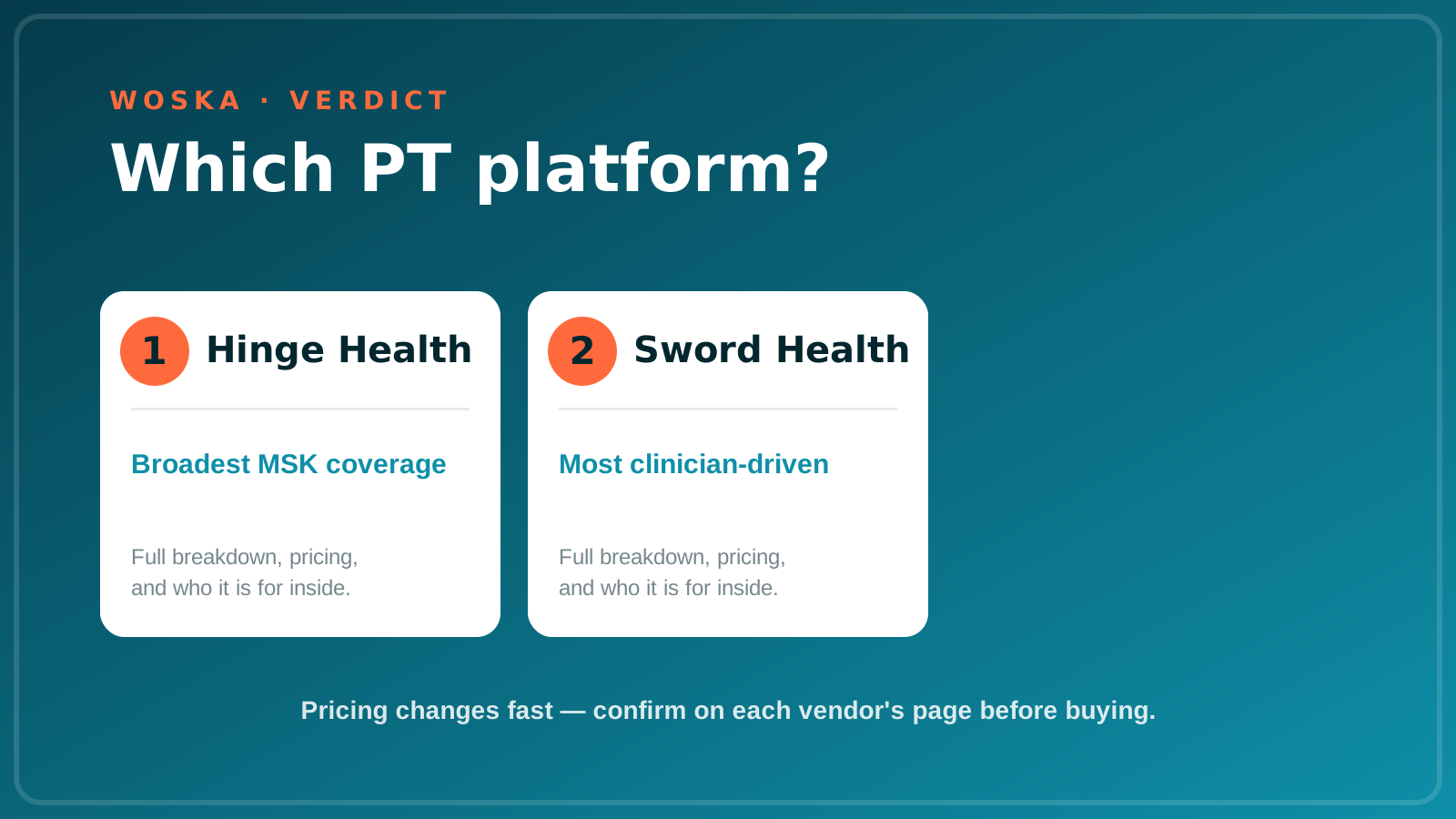
| Hinge Health | Sold via employer/health plan | Broad MSK condition management | Ongoing or complex pain conditions |
| Sword Health | Sold via employer/health plan | Clinician-led exercise with real-time correction | Tight clinical oversight during sessions |
Which one should you use?
Check first which one — if either — your employer or health insurance plan actually offers, since that access question usually settles the decision before feature differences do. If both are available, choose Hinge Health for the broadest multi-condition coverage, and choose Sword Health if you specifically want a clinician-designed plan with real-time computer-vision correction as the core experience.
FAQ
Can I sign up for Hinge Health or Sword Health without going through my employer? Generally no — both are sold to employers and health plans rather than directly to consumers, so access typically depends on whether your workplace or insurer has a contract with one of them.
Do these apps replace in-person physical therapy entirely? For many musculoskeletal conditions, they're designed to substitute effectively for routine in-person PT visits, but more complex or acute injuries may still need in-person evaluation and treatment alongside or instead of a digital program.
How does the AI actually help during a session? Both platforms use sensors or computer vision to track your movement in real time, flagging incorrect form or incomplete range of motion during an exercise — the AI's job is catching what a clinician watching the same session would catch, just automatically.
Is there a cost if my employer offers one of these? Typically these programs are offered at no direct cost (or a small copay) to employees as part of a health benefit, though specifics vary by employer contract.
What if neither platform is offered by my employer or plan? Ask your HR or benefits team whether a similar digital MSK benefit exists under a different name, or discuss options directly with your healthcare provider — this category has grown enough that many employer plans now include some equivalent.
Related guides
- Best AI Sleep Tracker in 2026
- Best AI Yoga Coach App in 2026
- Best AI Golf Swing Analyzer in 2026
- Explore Productivity tools
*Ratings and pricing reviewed monthly. Last updated September 2026.*
Bogdex · Founder & editor, woska
Bogdex builds and curates woska, testing AI tools against real workflows to judge which ones actually save time rather than which have the longest feature list.