Venngage wins when the pitch needs to become something visual and shareable — it analyzes your background and goals to draft the pitch, then lets you fine-tune and design it in a drag-and-drop editor, useful for a LinkedIn profile, networking one-pager, or interview leave-behind. Waitlister wins for speed: generate 15, 30, and 60-second versions from a short description with no signup at all. LogicBalls wins for grounding the pitch in something verified rather than generic — it checks your actual value proposition before writing, aiming for a more specific, defensible pitch rather than a polished-sounding but empty one. An elevator pitch fails for a predictable reason: it sounds like it could describe anyone. All three tools exist to fix that, from different angles — visual polish, speed, or verified specificity.
Where each one actually wins
Venngage treats the pitch as a design problem as much as a writing one — its AI analyzes your background and goals to draft a short, effective pitch, then hands it to a real drag-and-drop editor so you can turn it into something visual for a LinkedIn banner, a networking one-pager, or a printed leave-behind rather than just a script you memorize.
Waitlister is the fastest option here: describe your idea or role in a sentence or two, and it generates multiple pitch lengths (15, 30, and 60 seconds) immediately, with no signup or account required. It's the right tool when you need a usable draft in the next two minutes, not a polished final asset.
LogicBalls takes a more deliberate approach, verifying your core value proposition and specific claims before it writes the actual pitch script, aiming to avoid the generic, could-be-anyone problem that plagues most AI-generated pitches by grounding the output in something you've actually confirmed is true and specific to you.
Quick comparison
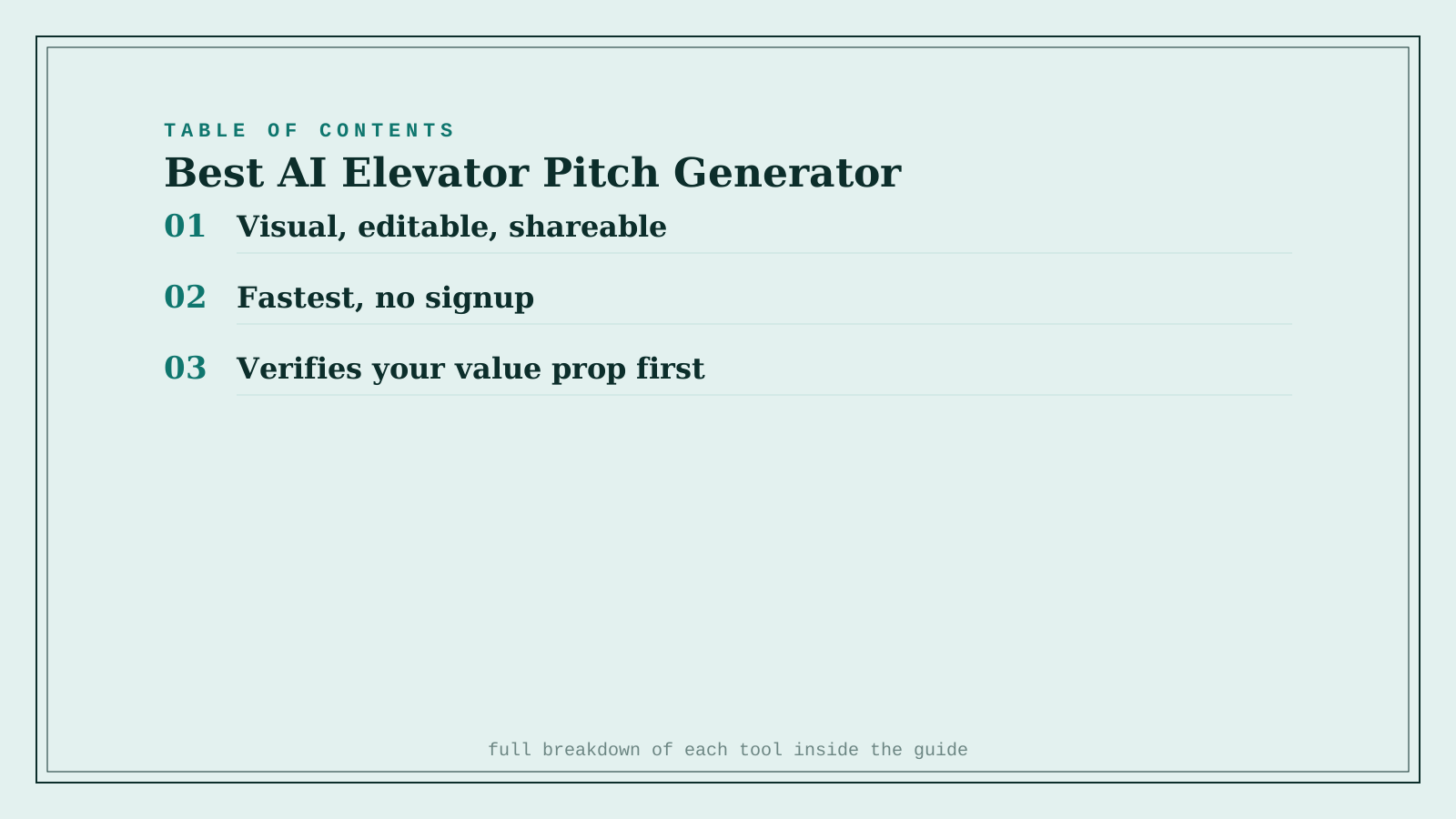
| Tool | Core strength | Starting price | Best fit |
|---|---|---|---|
| Venngage | Visual, editable, shareable output | Freemium, ~$16/mo | Needing a designed asset, not just a script |
| Waitlister | Fastest, no signup, multiple lengths | Free | A usable draft in the next two minutes |
| LogicBalls | Verifies your value prop before writing | Freemium | Avoiding a generic-sounding pitch |
Which one should you actually use?
Start with Waitlister if you need something fast and don't want to sign up for anything. Move to LogicBalls if your pitch keeps coming out generic and you want the underlying claims checked before the script gets written. Use Venngage once you need the pitch turned into an actual visual asset — a one-pager, a slide, a graphic — not just words you'll say out loud.
FAQ
Is a 30-second elevator pitch actually the right length for most situations? It depends on context — a genuine elevator ride or quick networking introduction suits something closer to 15-20 seconds, while a structured pitch competition or investor meeting opener can run the full 60. Generating multiple lengths (as Waitlister does) and picking based on the actual situation beats committing to one fixed version.
Can an AI-generated elevator pitch actually sound like me, or does it read as generic? It depends heavily on what you feed it — a pitch built from a one-line description tends to sound generic regardless of the tool, while one built from specific, real details (an actual outcome you achieved, a specific problem you solve, real numbers) reads as distinctive no matter which tool wrote the first draft.
Should I memorize my elevator pitch word-for-word? Generally no — memorize the structure and key points, then deliver it conversationally each time. A pitch that sounds recited rather than spoken naturally tends to undercut the credibility it's trying to build.
Do I need a different pitch for a job interview versus a startup investor? Yes — the value proposition, tone, and specific proof points differ meaningfully between contexts, so regenerate or substantially edit the pitch for each specific audience rather than reusing one version everywhere.
Related guides
- Best AI Public Speaking Coach in 2026
- Best AI Presentation Maker in 2026
- Explore Writing & Content tools
*Ratings and pricing reviewed monthly. Last updated September 2026.*
Bogdex · Founder & editor, woska
Bogdex builds and curates woska, testing AI tools against real workflows to judge which ones actually save time rather than which have the longest feature list.