Snyk Code is the best pick for real-time vulnerability scanning inside the IDE and pull requests, Semgrep is the best pick for fast, rule-based scanning that scales across large codebases without slowing down CI, and Corgea is the best pick when you want the tool to generate the fix, not just flag the line. All three catch vulnerabilities before they ship; the difference is how much of the fix they actually do for you.
The three, in one line each
Snyk Code runs AI-powered static analysis directly in the IDE and pull request workflow, flagging vulnerabilities as code is written rather than in a separate later scan.
Semgrep is a fast, rule-based static analysis engine built to run in CI at scale without becoming the bottleneck in a large codebase's build pipeline.
Corgea finds vulnerabilities and generates the fix as an actual pull request, shifting the workflow from "here's a flagged line" to "here's a patch ready to review."
Where each one actually wins
Snyk Code wins for catching issues as early as possible — directly where a developer is already working, before a commit even happens. Semgrep wins on scale and speed: its rule-based approach is built specifically to not slow down CI on very large codebases, which becomes the deciding factor once a scanner starts adding real minutes to every build. Corgea wins on a different axis entirely — remediation time. Finding a vulnerability is only half the job; Corgea's pitch is closing the loop by generating the actual fix, which matters most for teams with more flagged issues than security engineers available to patch them.
Many teams run Snyk Code or Semgrep for detection and only add Corgea once the backlog of flagged-but-unfixed vulnerabilities becomes the actual bottleneck, rather than starting with all three at once.
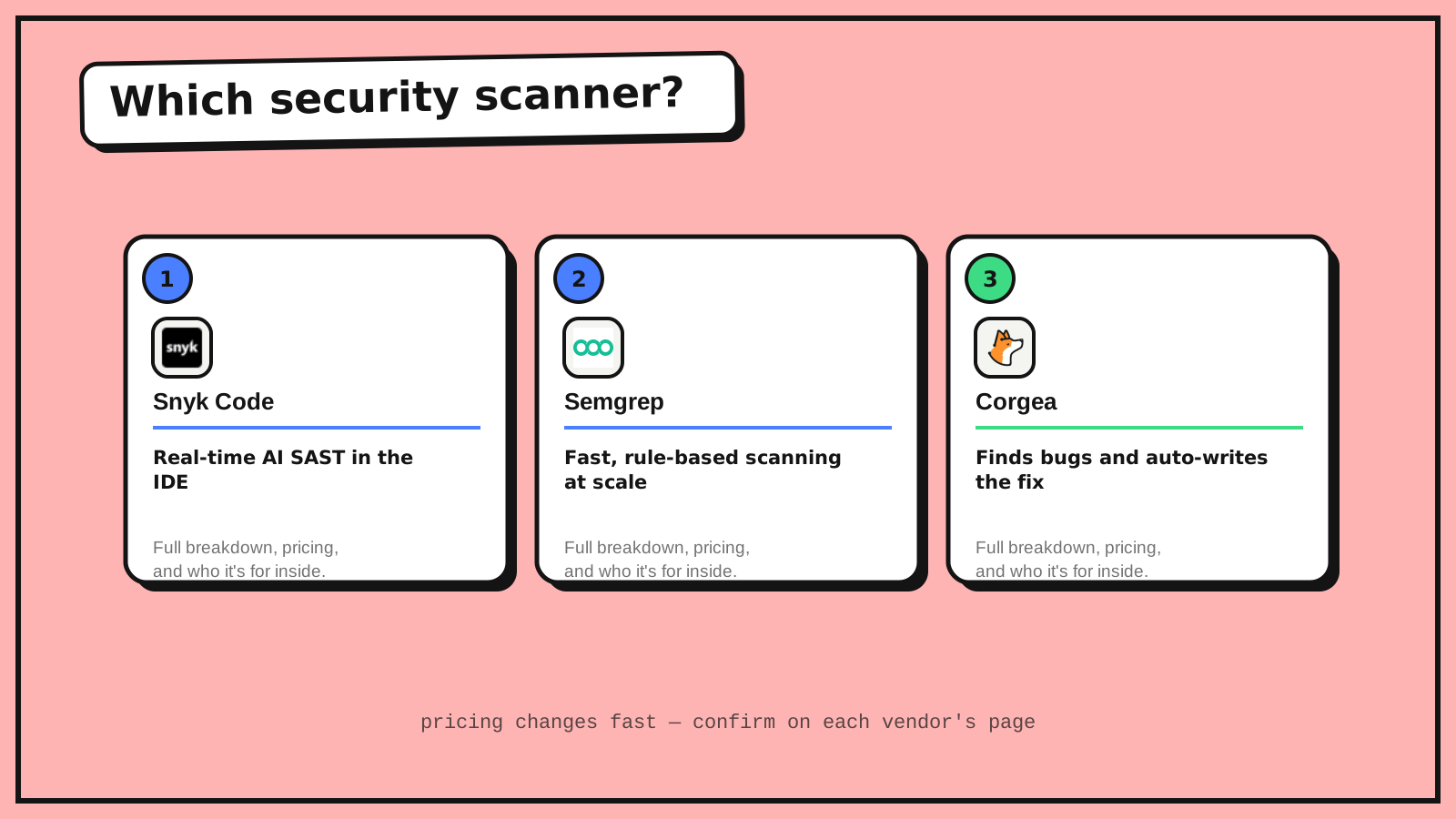
Quick comparison
| Tool | Starting price | Core job | Best fit |
|---|---|---|---|
| Snyk Code | $25/mo (free tier available) | Real-time IDE + PR scanning | Catching issues at write-time |
| Semgrep | $30/mo (free tier available) | Fast rule-based scanning at scale | Large codebases, CI speed matters |
| Corgea | $39/mo | Finds bugs and writes the fix | Teams with a fix-backlog problem |
Which one should you use?
Choose Snyk Code if you want vulnerabilities flagged as early as possible in the dev loop. Choose Semgrep if your codebase is large enough that scan speed in CI is a real constraint. Choose Corgea if detection isn't the problem — getting flagged issues actually fixed is.
FAQ
Can I run more than one of these together? Yes, and many teams do — Semgrep or Snyk Code for detection, with Corgea layered on top specifically to close out the resulting backlog faster than a security team could patch manually.
Do these tools replace a security review process entirely? No — they catch a meaningful share of common vulnerability classes automatically, but a human security review is still standard practice for anything handling sensitive data or novel attack surfaces.
Is Semgrep good for smaller projects too? Yes, its free tier covers smaller codebases well — its main advantage just becomes more pronounced as codebase size and CI frequency grow.
Related guides
*Ratings and pricing reviewed monthly. Last updated August 2026.*
Bogdex · Founder & editor, woska
Bogdex builds and curates woska, testing AI tools against real workflows to judge which ones actually save time rather than which have the longest feature list.