Goodcall answers and screens calls 24/7 so a rate quote request never hits voicemail after hours, Birdeye keeps your review profile strong enough that referrals keep converting, and PandaDoc turns a policy proposal into a signed document the same day instead of a week later. Independent insurance agencies compete on responsiveness and trust more than on product — a captive agent down the street sells the same carrier's policy — and these three tools each protect a different part of that responsiveness.
Where each one actually wins
Goodcall answers inbound calls, captures the caller's basic info and what they're shopping for, and either books a callback or routes urgent claims-related calls appropriately — the same job an after-hours answering service does, at a flat monthly rate instead of a per-call cost that scales against you during a storm season call spike.
Birdeye requests reviews automatically after a policy is bound or a claim is resolved, then centralizes responses across Google, Facebook, and industry-specific review sites into one dashboard — important because insurance shoppers compare agents on reviews more than almost any other local-service category, given how interchangeable the underlying product is.
PandaDoc turns a quote into a proposal with e-signature built in, so a prospect who's ready to bind coverage can do it from their phone instead of waiting for a callback to finish paperwork — a meaningful edge when a competitor is one search result away.
Why you likely need more than one
None of these three substitute for each other. An agency with great reviews and fast proposals still loses business if calls go unanswered during peak hours; an agency answering every call still loses deals if signing a policy takes three back-and-forth emails. The realistic order is Goodcall first (a missed call is a fully lost lead, the highest-cost failure), Birdeye second (compounds slowly but drives referral volume over months), and PandaDoc once quote-to-bind speed is the bottleneck rather than lead volume.
Quick comparison
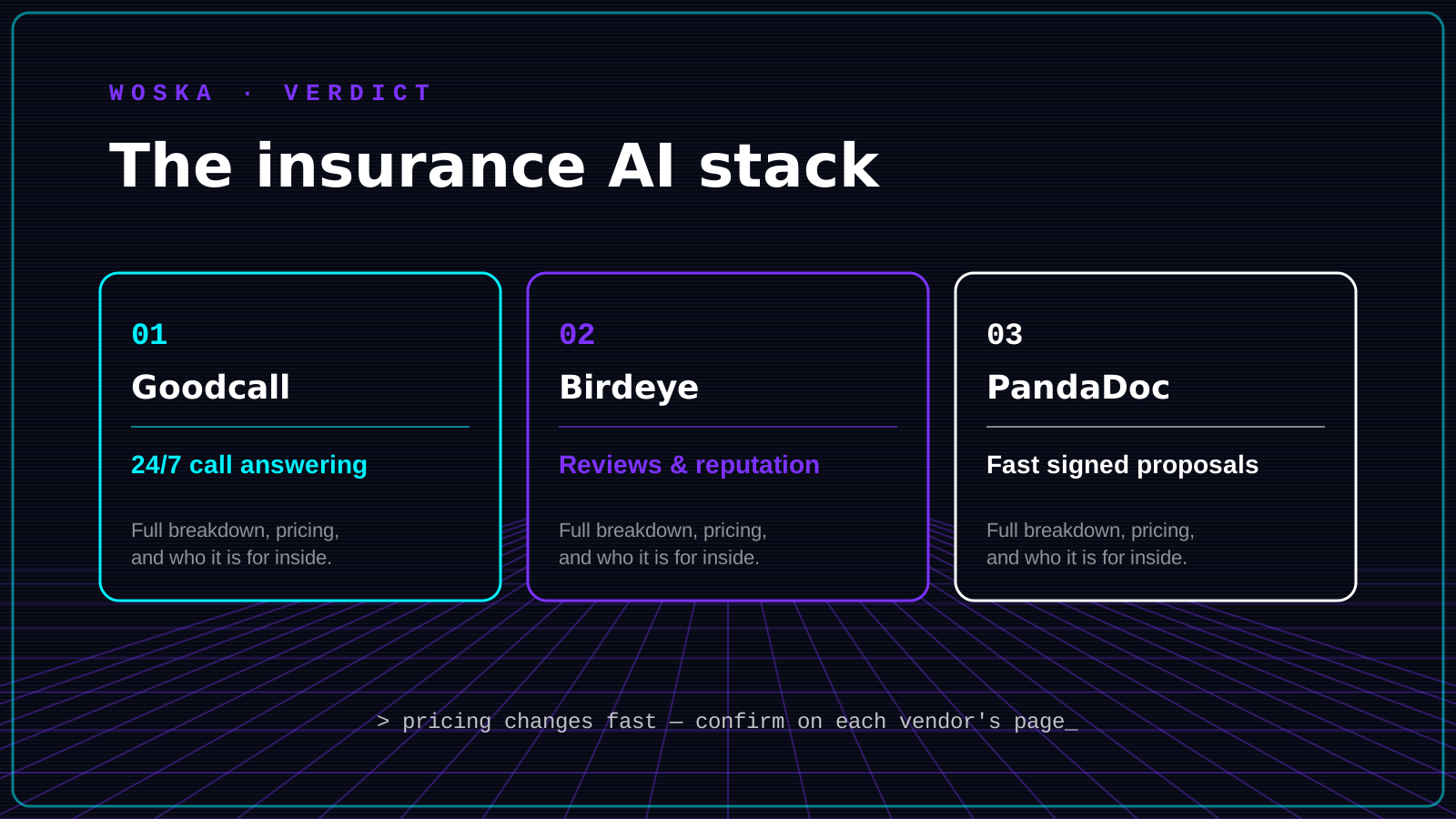
| Tool | Core job | Starting price | Best fit |
|---|---|---|---|
| Goodcall | 24/7 call answering & screening | $79/mo | Never missing a quote request after hours |
| Birdeye | Review requests + reputation management | $299/mo per location | Referral-driven agencies competing on trust |
| PandaDoc | Proposal + e-signature | From $19/mo | Speeding up quote-to-bind |
Which one should you set up first?
If missed calls are a felt, daily problem, start with Goodcall — it's the cheapest of the three and the failure mode it fixes (a lead that never even leaves a message) is the most expensive one. Add Birdeye once your review count and response time start affecting how you rank against other local agents. Bring in PandaDoc once you're generating enough quotes that a slow, manual proposal process is visibly costing you bound policies.
FAQ
Can an AI answering service handle actual insurance questions from callers? It should capture basic facts — what they're shopping for, current coverage, best callback time — and route or schedule from there, not attempt to quote rates or advise on coverage, which still requires a licensed agent.
Is Birdeye worth it for a single-location independent agency? It's a real cost at $299/mo, so it makes the most sense once you have enough policy volume that a steady stream of new reviews meaningfully affects referral flow — a brand-new agency may get more value starting with manual review requests first.
Does e-signature on a proposal hold up for binding an insurance policy? For the proposal and initial paperwork, yes — most PandaDoc-signed documents are legally binding under e-signature law, though carrier-specific binding requirements vary and some steps may still require a carrier's own portal.
What does a realistic starter stack cost per month? Roughly $400–450/mo total for one location across all three tools, which is worth comparing against the cost of a part-time front-desk hire covering the same after-hours and admin gaps.
Related guides
- AI Tools for Local Service Businesses: Missed Calls, Reviews, and Booking in 2026
- Best AI Receptionist & Phone Answering Agent in 2026
- Best AI Proposal and E-Signature Tool in 2026
- Explore Business & Sales tools
*Ratings and pricing reviewed monthly. Last updated September 2026.*
Bogdex · Founder & editor, woska
Bogdex builds and curates woska, testing AI tools against real workflows to judge which ones actually save time rather than which have the longest feature list.