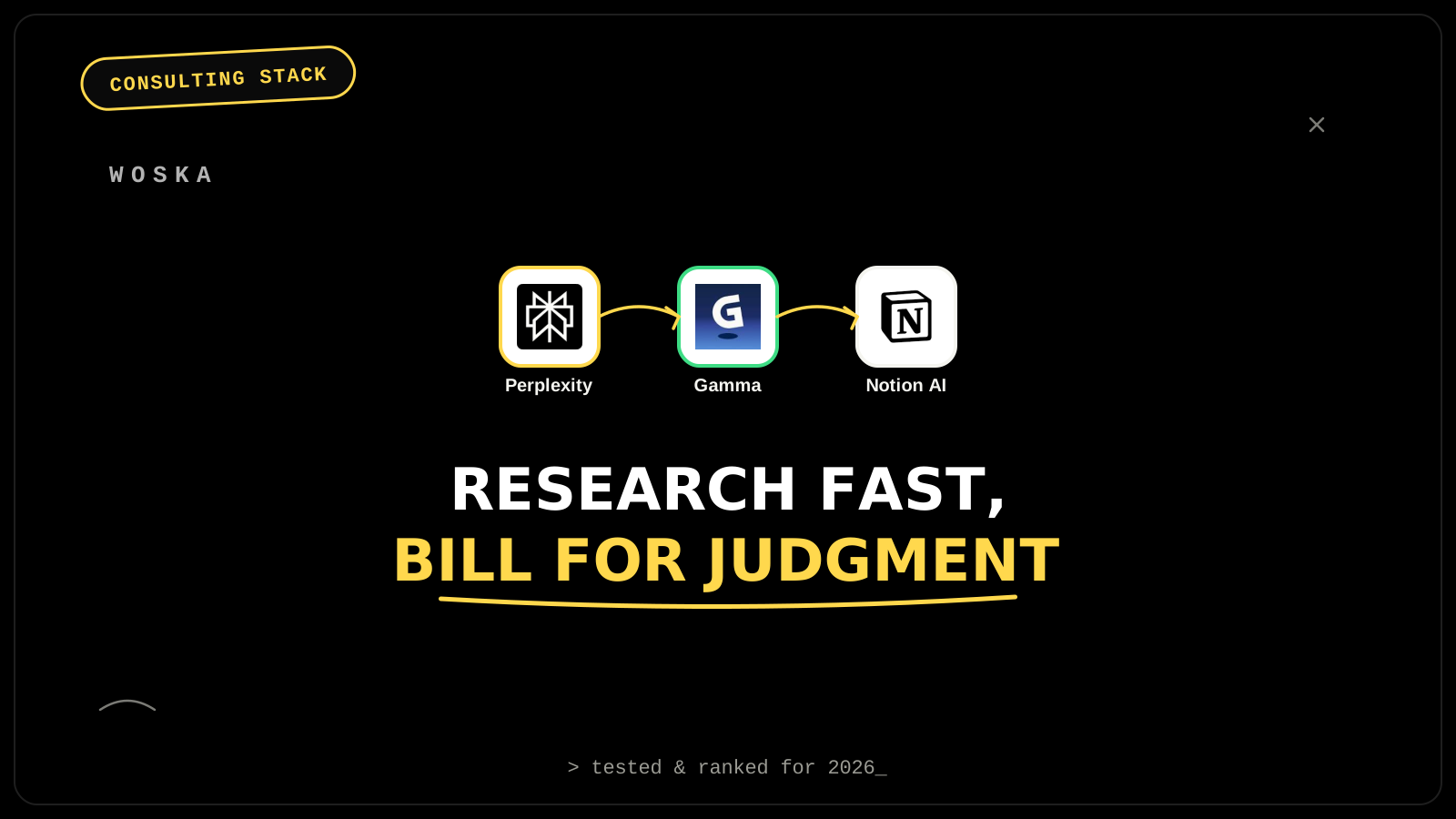
Perplexity researches a client's market, competitors, or industry with sources cited inline that you can actually defend in a client meeting, Gamma turns synthesized findings into a client-ready deck in a fraction of the usual production time, and Notion AI keeps engagement knowledge searchable across projects so a past deliverable doesn't have to be rebuilt from scratch every time a similar question comes up. A consulting firm sells synthesis and judgment, not raw research or deck production — these three compress the surrounding work so more billable time goes toward the part clients are actually paying for.
Where each one actually wins
Perplexity front-loads the research phase of an engagement — market sizing, competitor moves, regulatory context — with citations attached, which matters specifically in consulting because a finding you can't source back to something real doesn't survive a sharp client pushing back on it in the room.
Gamma takes a synthesized point of view and a rough outline and produces a formatted, presentable deck fast enough that junior staff time doesn't disappear into slide production for days before every client checkpoint — the actual analysis still has to be right, but the packaging stops being the bottleneck.
Notion AI holds and searches past engagement notes, frameworks, and deliverables across a firm's project history, which is where a lot of a boutique consultancy's real institutional knowledge quietly lives and disappears when a consultant who did the original work moves to a different project or leaves.
Why you likely need more than one
Fast research doesn't help if the resulting deck takes days to build; a great deck doesn't help if next quarter's similar engagement starts from zero because nobody could find the last one's framework. The realistic build order is Perplexity first (every engagement needs research, and the payoff is immediate), Gamma once deck production is visibly eating billable or junior-staff time, and Notion AI once the firm has enough project history that "we did something like this before" is a real, recurring, currently-wasted opportunity.
Quick comparison
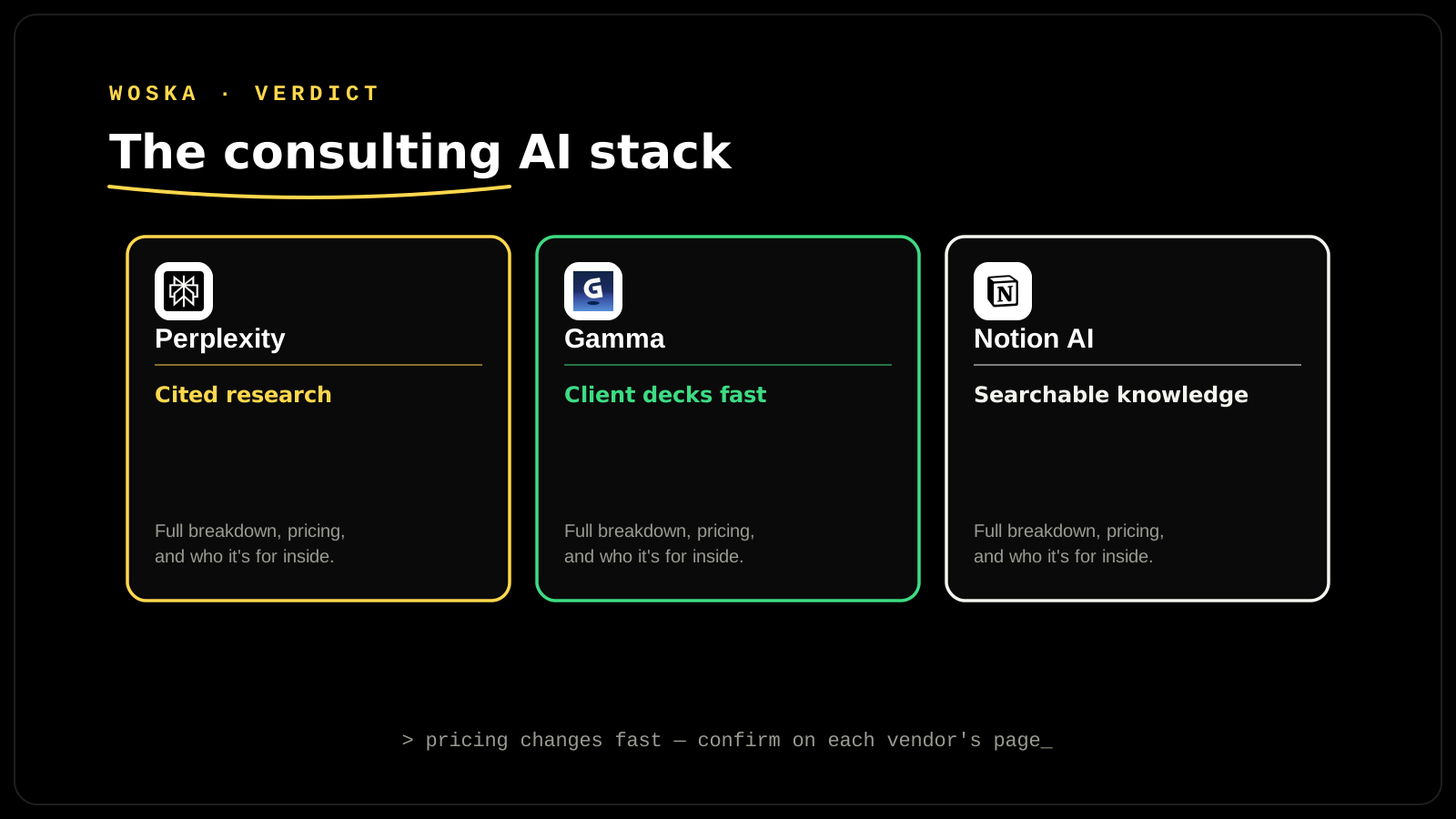
| Tool | Core job | Starting price | Best fit |
|---|---|---|---|
| Perplexity | Cited market and competitor research | Free, Pro from $20/mo | Research you can defend to a client |
| Gamma | Client deck production | Free, Plus from $8/mo | Cutting slide-production time before checkpoints |
| Notion AI | Searchable engagement knowledge base | From $20/user/mo (Business) | Not rebuilding past work from scratch |
Which one should you set up first?
Start with Perplexity — nearly every engagement needs research, and it's the cheapest, fastest win. Add Gamma once you can point to specific checkpoints where deck production, not analysis, was the actual time sink. Bring in Notion AI once the firm has enough completed engagements that a searchable archive would visibly save re-work, which is usually a firm-wide decision rather than one consultant's individual tool choice.
FAQ
Can AI-generated research replace a consultant's own analysis? No — it accelerates gathering the inputs (market data, competitor moves, precedent), but the synthesis, framework, and recommendation is still the consultant's judgment, which is the actual deliverable a client is paying for.
Is it safe to put confidential client engagement notes into Notion AI? Check your specific plan's data-handling terms and your client's confidentiality agreement before doing this — Business and Enterprise tiers typically offer stronger data controls than the free tier, and some client contracts explicitly restrict which third-party AI tools engagement data can touch.
Does a polished, AI-assisted deck reduce a client's perceived value of the work? Generally no, if the underlying analysis is sound — clients evaluate consulting work on the quality of the recommendation and how well it's defended in discussion, not on how many hours went into slide formatting.
What's a realistic monthly AI tool cost for a small consulting firm? Roughly $20–30/user/month across Perplexity Pro and Gamma Plus to start, with Notion AI's Business tier adding $20/user/month once the firm decides to build a shared knowledge base.
Related guides
- AI Tools for Financial Advisors and Wealth Management Firms in 2026
- Best AI Tool for Investor Updates and Board Decks in 2026
- How Professional Services Firms Use AI to Scope and Price Projects in 2026
- Explore Business & Sales tools
*Ratings and pricing reviewed monthly. Last updated September 2026.*
Bogdex · Founder & editor, woska
Bogdex builds and curates woska, testing AI tools against real workflows to judge which ones actually save time rather than which have the longest feature list.