AgencyAnalytics produces white-label client reports automatically instead of requiring a dedicated reporting hire, Canva AI covers design output volume a two- or three-person team couldn't otherwise handle across multiple client accounts, and Taplio builds the agency principal's own LinkedIn presence — the actual new-business channel for most small agencies — without a dedicated content person. A big agency's advantage has always been headcount depth across specializations; AI compresses that gap by letting a small team cover more ground per person without pretending to be something they're not.
The workflow, step by step
Step 1 — automate client reporting instead of staffing it. AgencyAnalytics generates white-label, branded client reports automatically from connected data sources, which is the specific task a larger agency assigns to a dedicated account coordinator and a small agency simply can't staff separately.
Step 2 — cover design volume without a full design team. Canva AI handles the steady volume of client social graphics, ad creative, and campaign assets across several accounts at once, closing the output gap between what a two-person creative team can produce manually and what multiple client accounts actually need.
Step 3 — build the agency's own visibility, since nobody else will. Taplio helps an agency principal maintain a consistent LinkedIn presence, which is where a meaningful share of small-agency new business actually originates — referrals and inbound from a principal who's visibly good at the work, not a dedicated business-development team a small shop can't afford.
Why small agencies should compete on responsiveness and focus, not headcount
A three-person agency can't out-staff a fifty-person shop, and trying to look bigger than you are usually reads as thin rather than credible. The realistic competitive angle is speed, focus, and direct access to the people actually doing the work — advantages AI tooling reinforces (faster reporting and design turnaround) rather than a headcount race a small agency can't win. Position around what a small, focused team genuinely does better, and let these tools remove the operational drag that used to force a choice between "grow headcount" and "stay small and slow."
Quick comparison
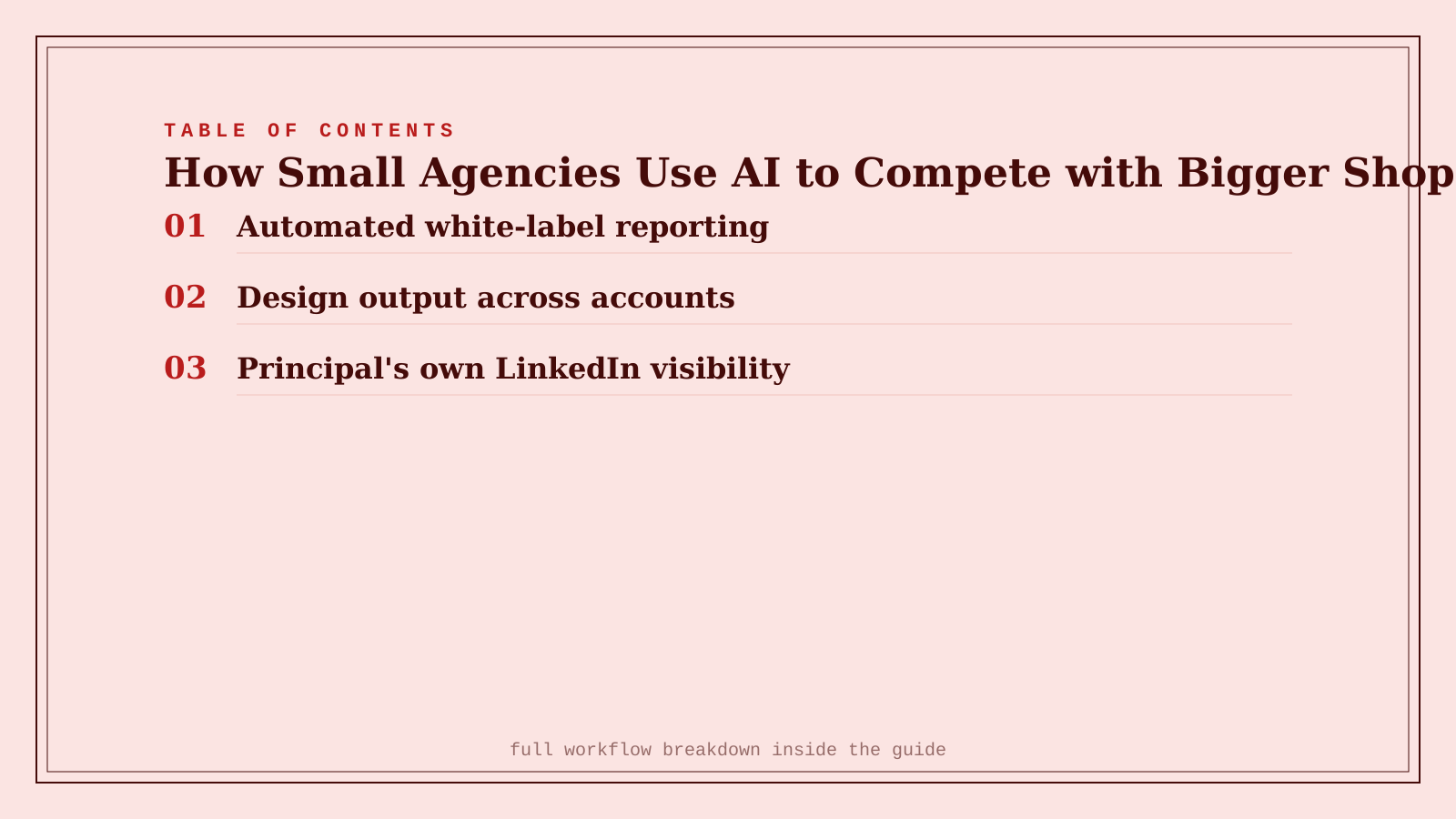
| Tool | Role in the workflow | Starting price | Job |
|---|---|---|---|
| AgencyAnalytics | Automated white-label client reporting | $79/mo (5-client minimum) | Reporting without a dedicated hire |
| Canva AI | Design output across multiple accounts | Freemium | Covering volume a small creative team can't alone |
| Taplio | Principal's own LinkedIn visibility | From $39/mo | The new-business channel most small agencies actually have |
How to actually run this as a 2-5 person agency
Set up AgencyAnalytics reporting templates once per client at onboarding, not from scratch every reporting cycle, so the automation actually saves the time it's supposed to. Build a simple Canva AI brand-kit template per client so design output stays on-brand even when produced fast across several accounts at once. Treat Taplio-assisted LinkedIn content as the principal's real voice with AI handling drafting and scheduling, not a ghostwritten feed that reads as obviously outsourced — audiences notice the difference, especially in a niche where the principal's actual expertise is the whole pitch.
FAQ
Can a tiny agency really compete with a big shop's specialist depth across every discipline? Not across every discipline at once — the realistic strategy is picking a narrower focus (a specific industry, channel, or service) where a small team's depth genuinely matches or beats a generalist big-shop team, rather than trying to match breadth.
Does AgencyAnalytics' 5-client minimum make it impractical for a brand-new agency with only a couple of clients? For a very new agency, yes — it's worth waiting until you have enough clients to meet or exceed that minimum before the cost makes sense, and using manual or simpler reporting in the meantime.
Is it risky for a small agency to lean this heavily on AI tools that clients might notice? Clients generally care about results and responsiveness, not which tools produced them — the risk isn't using AI tools, it's letting output quality slip because a tool was used carelessly, which is a quality-control issue regardless of what's behind it.
How much does this realistic AI stack cost for a 2-5 person agency? Roughly $120-160/mo total across all three tools at entry-level tiers — a meaningful cost for a very small agency, but far below what a dedicated reporting or content hire would cost in salary.
Related guides
- AI Tools for Marketing Agencies: Client Reporting, Research, and Delivery in 2026
- Best AI Tool for LinkedIn Content in 2026
- Part of our complete guide: AI Tools for Marketing Teams
- Explore Marketing tools
*Ratings and pricing reviewed monthly. Last updated September 2026.*
Bogdex · Founder & editor, woska
Bogdex builds and curates woska, testing AI tools against real workflows to judge which ones actually save time rather than which have the longest feature list.