Gong surfaces what actually happened across a quarter of customer calls and support interactions instead of relying on an account manager's memory, Gainsight flags renewal and expansion risk signals to make sure the QBR addresses the account's real trajectory, and Gamma turns both into a polished, client-ready deck fast enough to run this for every account, not just the largest ones. A customer-facing QBR is a different job from an internal board deck — it's about proving value delivered and setting up the next quarter, and this workflow builds that from real account data instead of a generic template.
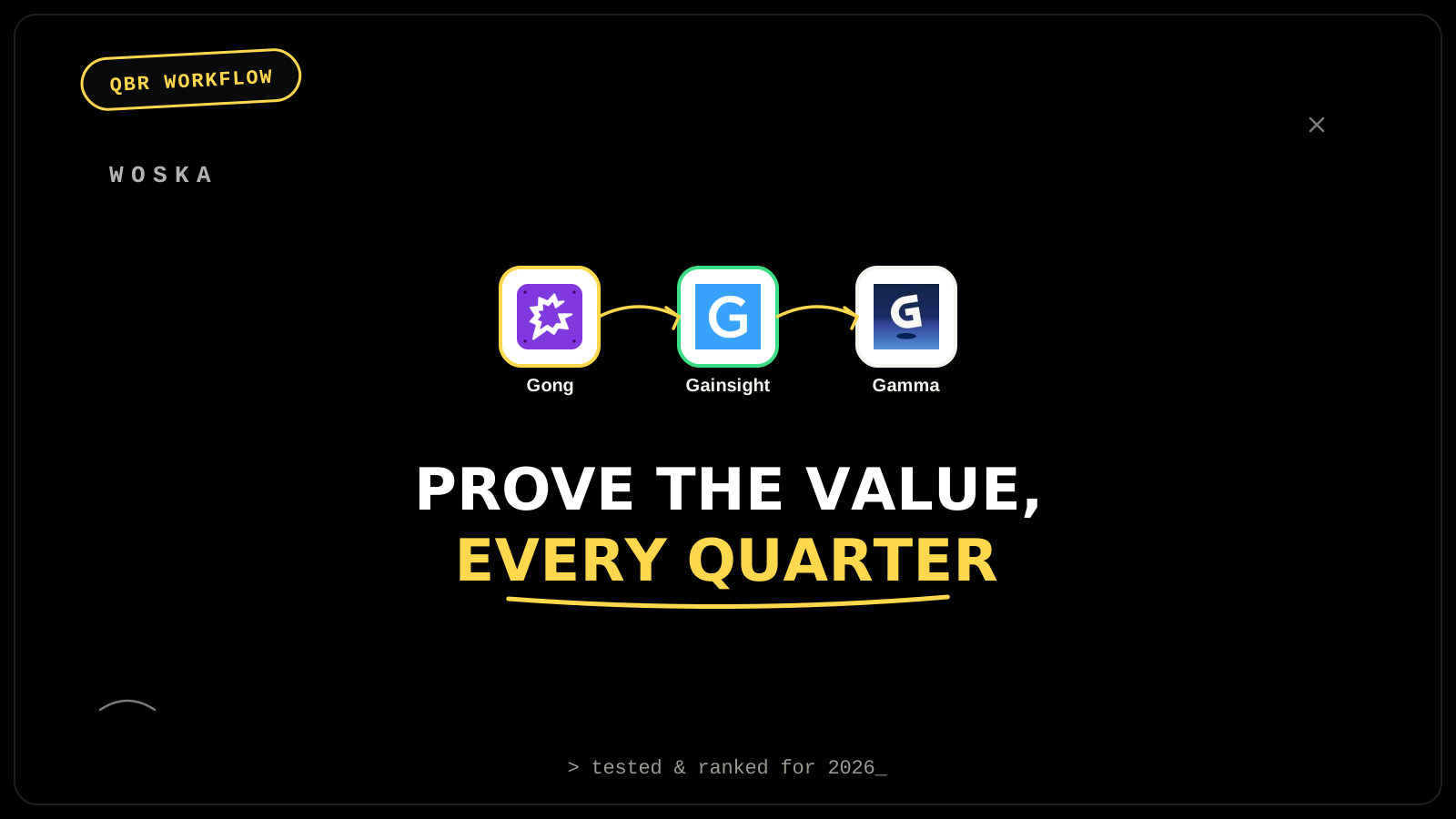
The workflow, step by step
Step 1 — pull the real story from the quarter's calls. Gong surfaces themes, recurring requests, and sentiment across every recorded call with the account that quarter, so the QBR reflects what actually happened rather than whichever conversations the account manager happens to remember clearly.
Step 2 — check the account's real health signal, not just the anecdote. Gainsight flags whether usage, engagement, and renewal-risk indicators support the story Gong's call data suggests — a QBR that only tells a positive anecdote while usage is quietly declining sets up an uncomfortable renewal conversation later.
Step 3 — build the actual deck fast. Gamma turns the account manager's notes, Gong's call themes, and Gainsight's health data into a formatted, presentable QBR deck in minutes, which is what makes running this for every account — not just your top ten — realistic.
Why a QBR needs both the anecdote and the data
A QBR built only from an account manager's memory of good conversations misses a quietly declining usage trend the data would have caught; a QBR built only from a health-score dashboard misses the specific context — a champion who left, a feature request repeated three times — that makes the review feel like it actually understands the account. Pulling from both Gong (the anecdote, grounded in real calls) and Gainsight (the trend, grounded in data) before building the deck is what keeps a QBR honest instead of either falsely rosy or coldly numeric.
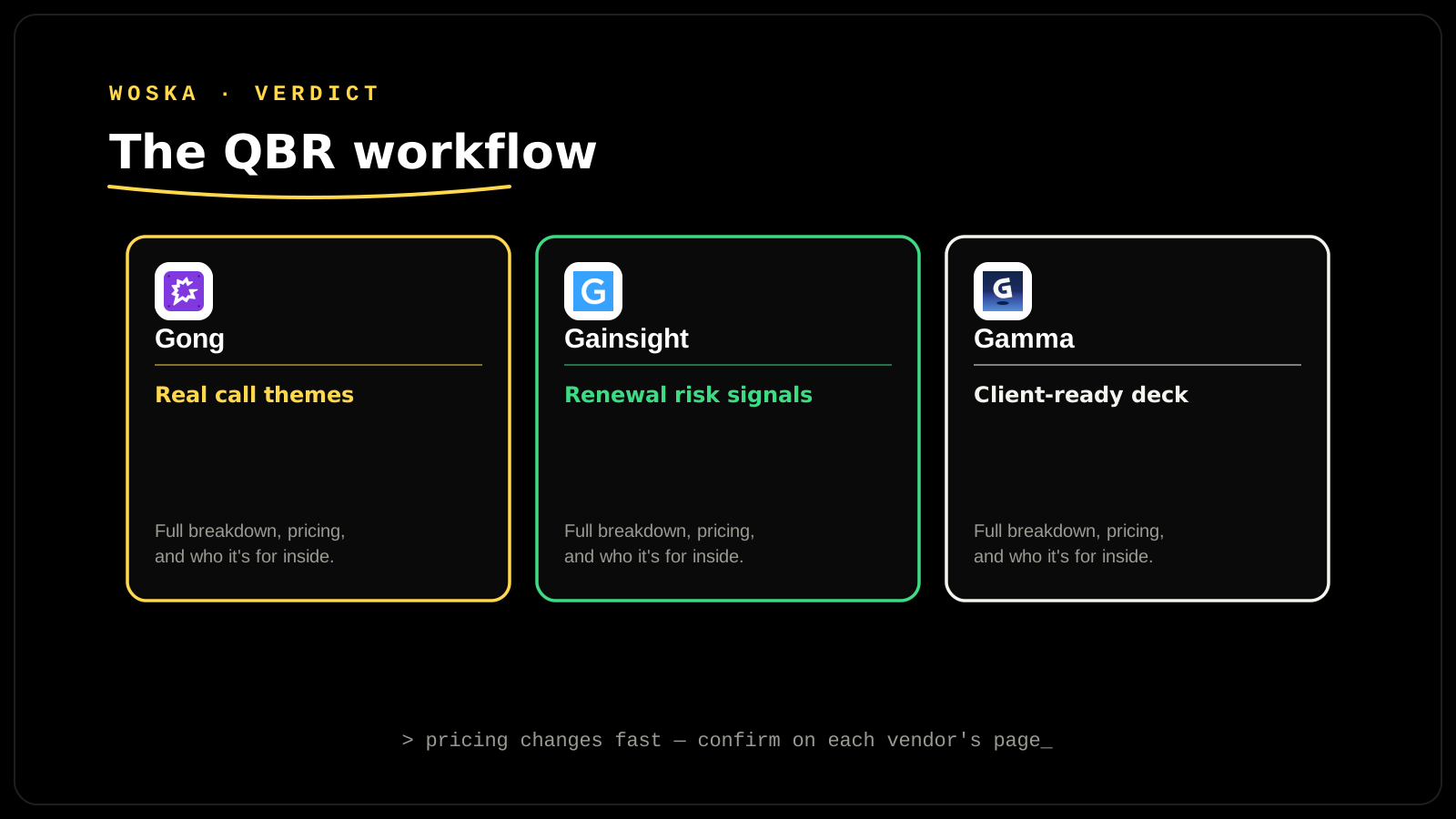
Quick comparison
| Tool | Role in the workflow | Starting price | Job |
|---|---|---|---|
| Gong | Call themes + sentiment across the quarter | Custom pricing | Grounding the QBR in what actually happened |
| Gainsight | Renewal & expansion risk signals | $150-300/user/mo | Checking the anecdote against the real trend |
| Gamma | Client-ready deck from both inputs | Free, Plus from $8/mo | Making it fast enough to run for every account |
How to actually run this every quarter
Set a fixed cadence — pull Gong themes and Gainsight health data on the same day each quarter, roughly two weeks before the actual QBR meeting, rather than scrambling the day before. Have the account owner review both before building the deck, since they're the one who has to defend the narrative live in the client meeting. Reserve manual, extra-polished decks for your largest or highest-risk accounts only — the whole point of this workflow is making a decent QBR realistic for every account, not perfecting it for a handful.
FAQ
Do smaller accounts really need a full QBR, or is this overkill below a certain size? Below a certain account size, a lighter version (skip the full Gamma deck, send a shorter written summary) is usually more appropriate — this workflow's value is making a real QBR possible at more accounts than you could manually build decks for, not mandating the heaviest version for every account regardless of size.
Can Gong's call analysis mislead a QBR if the account went quiet and stopped taking calls? Yes — a lack of recent calls itself is a signal worth flagging, and Gainsight's usage-based health data becomes more important, not less, in exactly that scenario, since call sentiment alone can't tell a story about an account that's disengaged.
How do you keep the deck from looking obviously AI-templated across every client? Keep the account owner's own framing and specific language in the narrative section rather than accepting Gamma's default phrasing verbatim — the data and structure can be automated, but the actual relationship-specific voice should still come from the person who owns that account.
What's a realistic monthly cost for this workflow across a customer success team? Gainsight is the major cost driver at $150-300/user/month; Gong is separately and typically enterprise-priced; Gamma is comparatively minor at $8+/month per seat — most teams already own Gong and Gainsight for other reasons, with Gamma added specifically to speed up deck production.
Related guides
- Gainsight vs ChurnZero vs Custify: Best AI Customer Churn Prediction Tool in 2026
- Best AI Tool for Sales Call Analysis in 2026
- Part of our complete guide: AI Tools for Customer Support & Success
- Explore Business & Sales tools
*Ratings and pricing reviewed monthly. Last updated September 2026.*
Bogdex · Founder & editor, woska
Bogdex builds and curates woska, testing AI tools against real workflows to judge which ones actually save time rather than which have the longest feature list.