Klaviyo (for ecommerce) or HubSpot Breeze (for B2B) segments churned or lapsed customers by likely reason for leaving instead of treating them as one undifferentiated list, and ChatGPT drafts win-back messaging matched to that specific reason — a price objection gets a different message than a customer who churned over a missing feature you've since shipped. A single generic "we miss you, here's 10% off" email performs worse than messaging that at least attempts to address why someone actually left, and segmenting by likely reason is the part most win-back campaigns skip.
The workflow, step by step
Step 1 — segment by likely reason, not just "churned." Klaviyo uses purchase and engagement history to group lapsed ecommerce customers by behavior patterns (price-sensitive, one-time buyer, previously frequent), while HubSpot Breeze does the equivalent for B2B accounts using CRM and product-usage data, so the campaign starts from an actual hypothesis about why each group left.
Open Klaviyo → · Open HubSpot Breeze →
Step 2 — draft messaging matched to each segment. ChatGPT drafts distinct win-back copy for each segment — a different message for a price-sensitive lapsed buyer than for someone who churned over a feature gap you've since closed — rather than one generic template blasted at everyone regardless of why they actually left.
Step 3 — send through your existing platform and measure by segment. The actual sending happens through Klaviyo or HubSpot Breeze's existing email infrastructure; the value of this workflow is in the segmentation and matched messaging upstream, not a new sending tool — measure win-back rate by segment, not as one blended campaign number, since a blended number hides which reasoning actually worked.
Why "one email to everyone who churned" underperforms
Customers churn for genuinely different reasons — price, a missing feature, poor onboarding, simply not needing the product anymore — and a single generic message can only address one of those reasons at best, missing everyone else. Segmenting first (Step 1) and writing to the specific segment (Step 2) instead of writing one message and hoping it resonates broadly is the entire difference between a win-back campaign that works and one that reads as generic enough to ignore.
Quick comparison
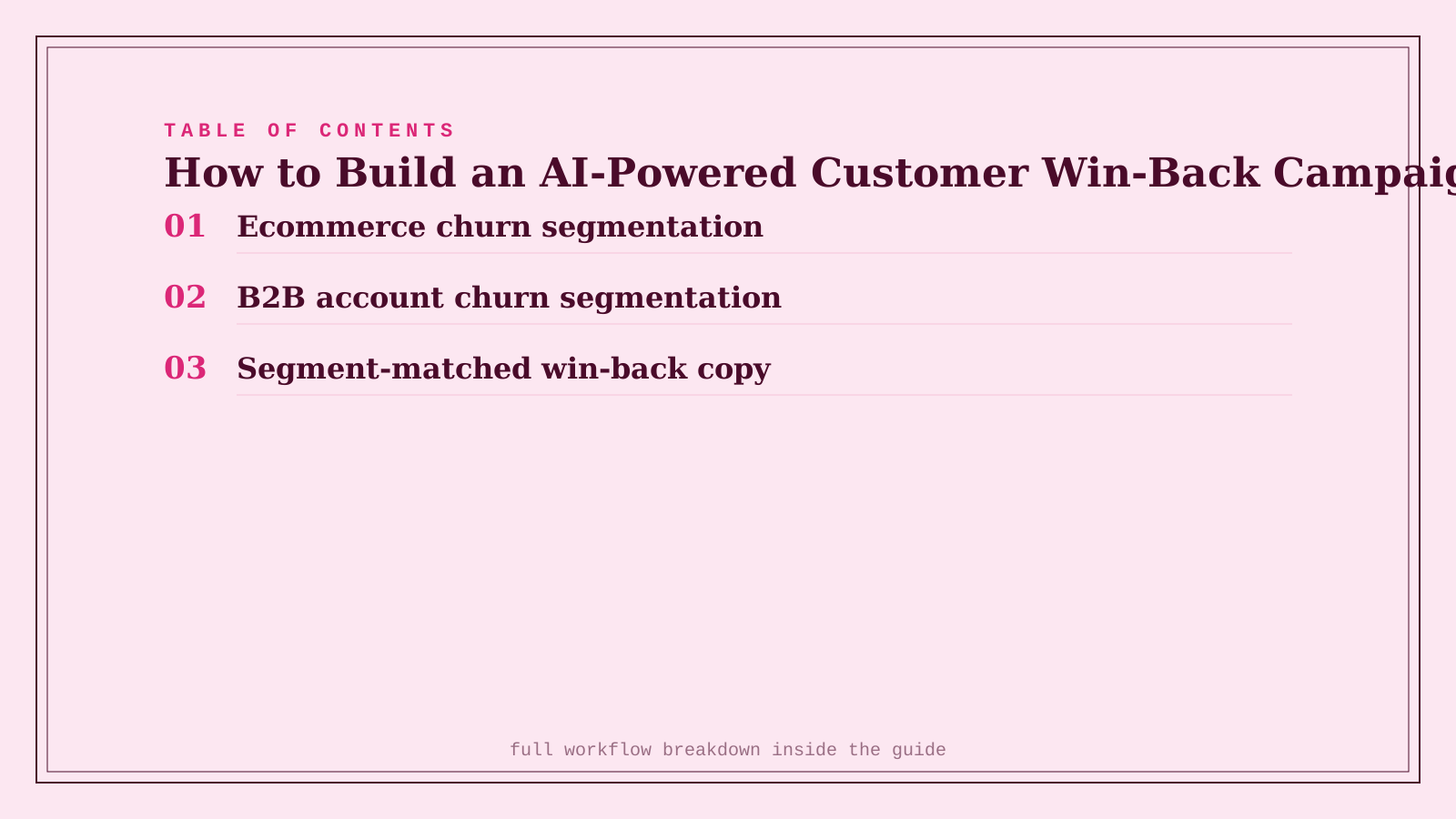
| Tool | Role in the workflow | Starting price | Job |
|---|---|---|---|
| Klaviyo | Ecommerce churn segmentation | Freemium | Grouping lapsed buyers by behavior pattern |
| HubSpot Breeze | B2B account churn segmentation | Free tier; scales with Hub tier | The equivalent segmentation for B2B accounts |
| ChatGPT | Segment-matched win-back copy | Free, Plus from $20/mo | Writing to the actual reason, not a generic template |
How to actually run this without over-messaging churned customers
Cap how often a lapsed customer receives win-back messaging — repeatedly emailing someone who's clearly not coming back does more brand damage than staying quiet. Test the segmented approach against a simple control group receiving your old generic message, so you can actually confirm the extra segmentation effort is earning its keep before rolling it out permanently. Revisit segments quarterly, since the mix of why customers are churning shifts as your product and pricing change.
FAQ
How far back should "lapsed" or "churned" be defined for this campaign? That depends entirely on your typical purchase or renewal cycle — a subscription business should define it relative to its billing cycle, while an ecommerce brand should base it on typical repurchase timing for that product category, not a fixed arbitrary window borrowed from a different business.
Does this replace a proper exit survey or churn interview? No — segmentation from behavioral data is an inference, not a confirmed reason; a direct exit survey or cancellation-flow question is more accurate when you can get a customer to actually answer it, and the two approaches work well combined rather than as substitutes.
Is a discount always the right win-back offer? No — a customer who churned over a missing feature responds better to being told that feature now exists than to a discount, which is exactly the point of segmenting by likely reason instead of defaulting to a price incentive for everyone.
What response rate should a segmented win-back campaign realistically expect? There's no universal benchmark since it varies heavily by industry, price point, and how long customers have been lapsed — track your own segmented campaign against your own generic-campaign baseline rather than an external number that won't reflect your specific business.
Related guides
- Best AI Tool for Email Marketing in 2026
- Gainsight vs ChurnZero vs Custify: Best AI Customer Churn Prediction Tool in 2026
- Part of our complete guide: AI Tools for Customer Support & Success
- Explore Marketing tools
*Ratings and pricing reviewed monthly. Last updated September 2026.*
Bogdex · Founder & editor, woska
Bogdex builds and curates woska, testing AI tools against real workflows to judge which ones actually save time rather than which have the longest feature list.