Gong surfaces the real reasons deals were won or lost by analyzing what was actually said across every recorded call, not a rep's after-the-fact summary; Perplexity researches the gaps — competitor positioning, market context — that a lost prospect won't spell out directly in an exit conversation; and Notion AI turns individual deal post-mortems into a searchable, pattern-tracked record instead of a folder of disconnected one-off notes. Most B2B teams that claim to do win/loss analysis actually do it inconsistently, for a handful of high-profile deals, based on a rep's memory rather than the actual call — this workflow makes it systematic enough to run on most closed deals, not just the ones that felt notable.
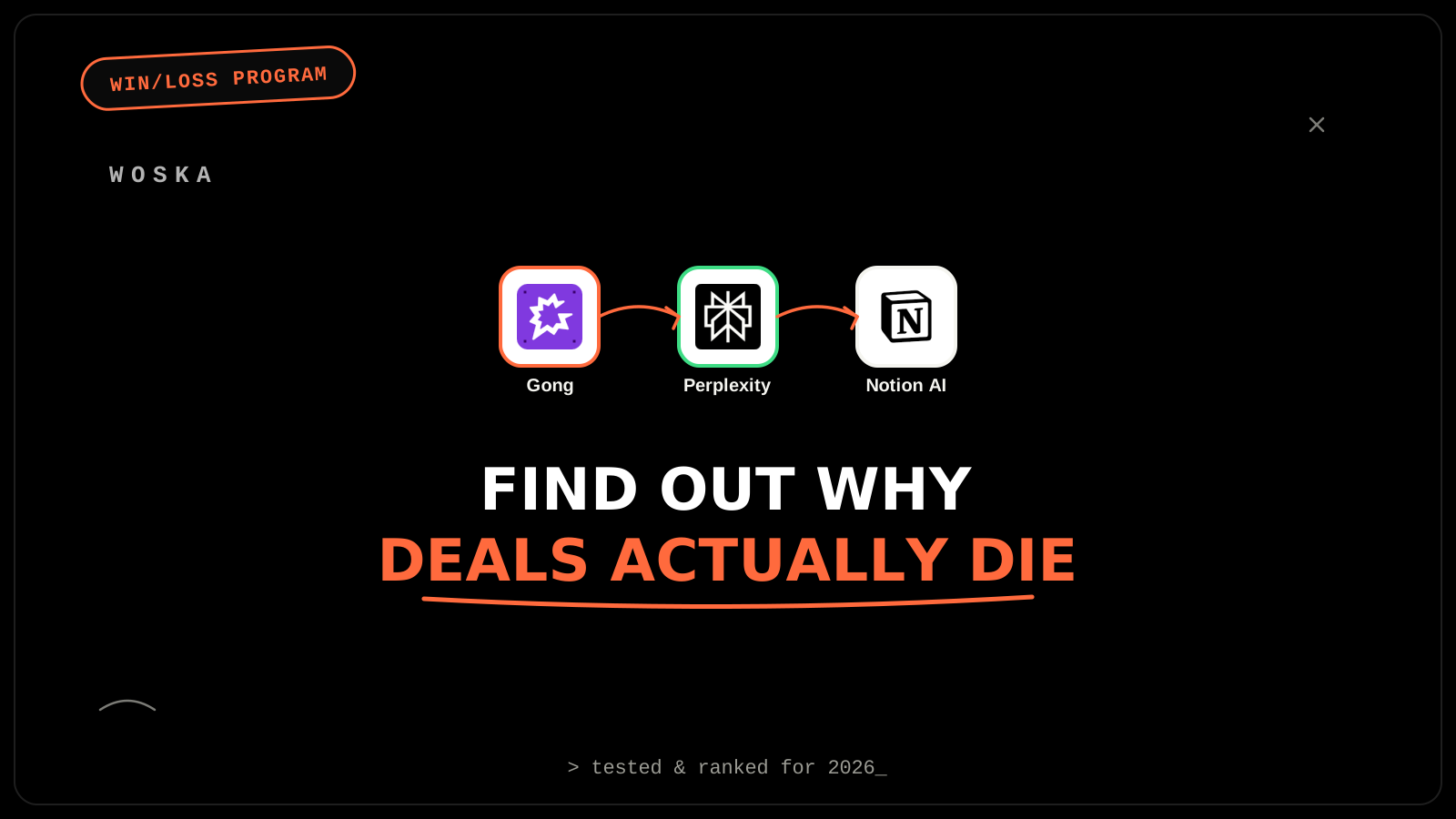
The workflow, step by step
Step 1 — pull the real reason from the actual calls. Gong analyzes recorded calls on a closed deal for the objections, competitor mentions, and pricing pushback that actually came up, which is a meaningfully different — and more accurate — input than asking the rep to summarize why they think they won or lost weeks later.
Step 2 — research the context a prospect won't say out loud. Perplexity fills in market and competitor context around a specific loss — a competitor's recent feature launch, a funding announcement, a pricing change — that explains a decision the prospect described only vaguely ("we went another direction") in the actual call.
Step 3 — build a pattern-tracked record, not a pile of one-offs. Notion AI turns each deal's findings into a structured, searchable record, so after a quarter of deals you can query for recurring patterns — a specific competitor showing up repeatedly, a pricing objection at a particular deal size — instead of relying on anecdote about what "seems to keep happening."
Why call data beats asking the rep
A rep's own account of why a deal was lost is filtered through their own performance and biases — a rep rarely reports "I was unprepared for their competitor question" as the actual reason. Building the analysis from the real call record (Step 1) rather than a rep's retrospective summary is what makes the resulting patterns trustworthy enough to actually act on, rather than just confirming whatever story is already comfortable to tell.
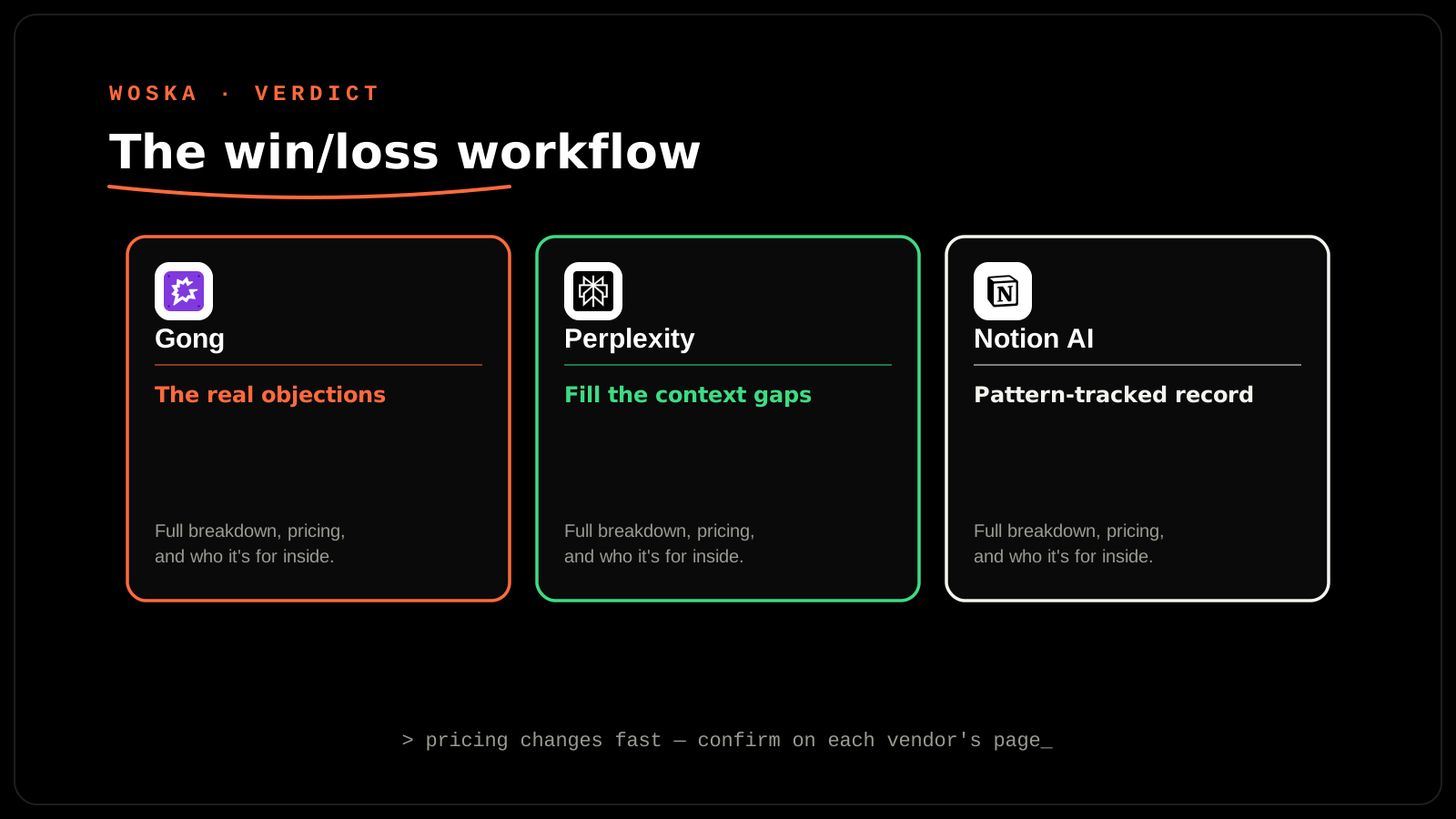
Quick comparison
| Tool | Role in the workflow | Starting price | Job |
|---|---|---|---|
| Gong | Real objections and competitor mentions from calls | Custom pricing | The accurate version of "why," not the comfortable one |
| Perplexity | Market and competitor context research | Free, Pro from $20/mo | Filling in what a prospect won't say directly |
| Notion AI | Searchable, pattern-tracked deal record | From $20/user/mo (Business) | Finding recurring patterns across a quarter of deals |
How to actually run this every quarter
Run this on a representative sample of closed deals each quarter — wins and losses both, not just the losses everyone already wants to understand — since win patterns are just as informative and get skipped far more often. Assign someone specific (a sales ops or enablement owner, not "whoever has time") to actually query the Notion AI record for patterns each quarter, since the analysis is worthless if nobody looks at the accumulated data. Share findings back with the sales team as specific, actionable patterns — "deals over $50K lose to Competitor X on integration depth" — not a vague "we should improve our win rate" summary nobody can act on.
FAQ
Is this workflow useful for a team with a low deal volume? Patterns need enough deals to be reliable, so a very low-volume team will see less statistical confidence in any given quarter — but even a handful of well-analyzed deals beats no structured analysis at all, and the record compounds in usefulness over time.
Should reps know their calls are being analyzed for win/loss patterns? Yes — this should be transparent, framed as improving the team's collective playbook rather than individual performance review, since a rep who feels judged rather than helped will be far less receptive to the resulting recommendations.
Can this replace direct win/loss interviews with actual prospects? No — a direct interview with a prospect who's willing to talk candidly is still the gold standard when you can get it; this workflow is the practical version that works even when a formal interview isn't feasible, which is most of the time.
How is this different from a standard sales pipeline forecasting tool? Forecasting tools predict what's likely to happen to open deals; this workflow analyzes what already happened to closed ones to find patterns worth changing — they're complementary, not overlapping, tools solving different questions.
Related guides
- Best AI Tool for Sales Call Analysis in 2026
- How Sales Teams Turn Competitor Intel into Battlecards in 2026
- Part of our complete guide: AI Tools for Sales & Business Ops
- Explore Business & Sales tools
*Ratings and pricing reviewed monthly. Last updated September 2026.*
Bogdex · Founder & editor, woska
Bogdex builds and curates woska, testing AI tools against real workflows to judge which ones actually save time rather than which have the longest feature list.