For a legal or compliance team specifically, the question isn't just "which AI notetaker works best" — it's "which one creates the least legal exposure," and as of 2026 that question has real, current answers. Otter.ai faces four consolidated federal lawsuits over recording participants without explicit consent. Fireflies.ai faces two separate biometric-privacy lawsuits filed in Illinois. Fathom's consent model and CRM-focused output make it worth evaluating on its own merits rather than defaulting to whichever notetaker the rest of the company already uses. A general "best meeting notes tool" comparison won't surface this — it's a legal-risk question specific to teams where recording consent actually matters.
The consent problem, specifically
AI meeting bots that join a call or record a conversation without the affirmative consent of every participant can expose the people using them to violations of federal and state consent laws — a real, live legal question in 2026, not a hypothetical. Employment law attorneys have specifically flagged the "single-consent" model many notetakers default to as risky in two-party and all-party consent states like California, where every participant, not just the meeting host, has to actually agree to being recorded.
Otter.ai is currently facing four consolidated federal lawsuits alleging its AI notetaker recorded participants without proper consent and, in one allegation, kept listening after a call had technically ended. For a compliance team, active, consolidated litigation over exactly the behavior a compliance function exists to prevent is a genuine disqualifying signal, not a minor asterisk.
Fireflies.ai faces two separate biometric privacy lawsuits in Illinois — a state with one of the strictest biometric-data consent laws in the country (BIPA). Its output format is also generally considered less structured for formal compliance or legal meeting-minutes purposes than a purpose-built alternative, though its custom templates can approximate meeting minutes for teams with moderate requirements.
Fathom doesn't carry the same publicly reported litigation exposure as the other two as of this writing, and its per-meeting consent handling is worth verifying directly against your specific state's requirements before rolling it out — the absence of a current lawsuit is not the same as a guarantee of compliance, and this entire space is moving fast enough that the right move is checking current status at deployment time, not trusting any point-in-time comparison indefinitely.
Quick comparison
| Tool | Known 2026 legal exposure | Output format | Recommended for legal/compliance |
|---|---|---|---|
| Otter.ai | 4 consolidated federal consent lawsuits | Not structured for formal minutes | Not recommended until resolved |
| Fireflies | 2 biometric-privacy suits (Illinois/BIPA) | More structured, custom templates | Verify state-specific consent handling |
| Fathom | No major reported litigation as of writing | CRM-focused summaries | Verify current consent model directly |
What a legal or compliance team should actually do before choosing
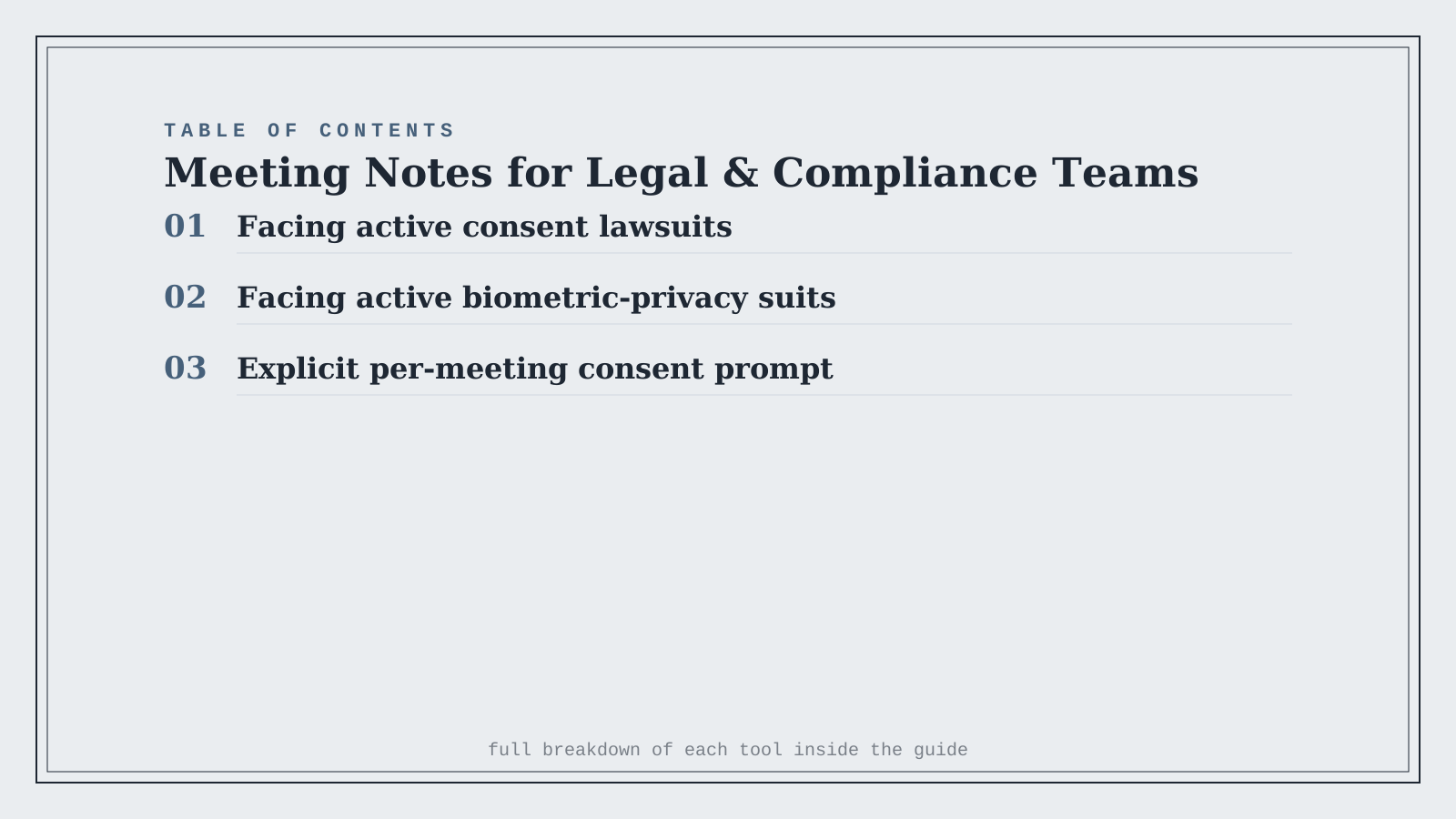
Don't rely on this comparison as a permanent verdict — verify the current litigation status and each vendor's consent-handling documentation directly before deployment, since this is an actively moving legal area. Confirm whether your organization operates in an all-party consent state (California, among others) and require an explicit, affirmative per-meeting consent prompt for every participant regardless of which tool you choose — this is the single highest-leverage compliance step, independent of vendor.
FAQ
Does an active lawsuit against a vendor mean their product is currently illegal to use? No — an active lawsuit is an allegation working through the legal system, not a final finding of liability. But for a legal or compliance team specifically, choosing a vendor with known active litigation over the exact behavior you'd be deploying is a risk worth weighing heavily, independent of the eventual outcome.
What is an all-party consent state, and why does it matter here? In an all-party (or "two-party") consent state, every participant in a recorded conversation must consent, not just the person who initiated the recording — California is the most cited example. A notetaker's default consent model may only notify, not obtain affirmative consent from, every participant, which is exactly the alleged gap in the current lawsuits.
Should we just avoid all AI notetakers until this legal area settles? Not necessarily — the practical fix is requiring an explicit, affirmative consent step for every meeting participant regardless of tool, and choosing a vendor whose current consent flow and litigation posture you've verified directly, rather than avoiding the category or picking blindly.
How often should we re-check vendor litigation status on this? At minimum before any new deployment or contract renewal — this is a fast-moving legal area in 2026, and a vendor's status can change meaningfully within months.
Related guides
- Best AI Meeting Notes Tool in 2026: Otter vs Fireflies vs Fathom vs Granola
- Best AI Tool for Turning Legal Research into a Client-Ready Memo in 2026
- Best AI Meeting Assistant for Remote and Async Teams in 2026
- Explore Business & Sales tools
*News and pricing details reviewed as they change. Last updated August 2026.*
Bogdex · Founder & editor, woska
Bogdex builds and curates woska, testing AI tools against real workflows to judge which ones actually save time rather than which have the longest feature list.