Gong analyzes recorded calls across your whole pipeline to find where deals actually stall — a specific objection, a missing stakeholder, a proposal that never gets a response — instead of guessing, PandaDoc removes the days routinely lost to manual proposal formatting and signature chasing, and HubSpot Breeze flags a deal that's gone quiet before it's too late to revive it. Sales cycles rarely get long because of one big blocker — they get long from a series of small, avoidable delays compounding across every stage, and each of these tools targets a different one of those delays.
The workflow, step by step
Step 1 — find out where deals actually stall. Gong analyzes patterns across recorded calls to surface where deals commonly get stuck — a specific objection nobody's addressing well, a missing economic buyer, a proposal stage where deals quietly go cold — which is a very different, more useful input than a rep's individual guess about their own pipeline.
Step 2 — remove the mechanical delay in getting a proposal out and signed. PandaDoc generates and sends a proposal with e-signature built in, cutting the days that otherwise disappear into manual formatting, internal approval routing, and chasing a signature over email.
Step 3 — catch a stalling deal before the quarter ends without it. HubSpot Breeze flags deals that have gone quiet — no recent activity, a stakeholder who stopped responding — early enough that a rep can intervene, rather than discovering at forecast time that a deal everyone assumed was progressing had actually gone cold weeks earlier.
Why fixing the stage where deals stall matters more than speeding up every stage evenly
Most sales cycles have one or two stages where the majority of total elapsed time actually accumulates — commonly proposal-to-signature or a specific late-stage objection — and generically trying to speed up every stage equally wastes effort on stages that were never the real bottleneck. Using Gong's pattern data (Step 1) to find your specific bottleneck before deciding where PandaDoc or process changes should focus is what makes this workflow about your actual pipeline, not a generic sales-efficiency checklist.
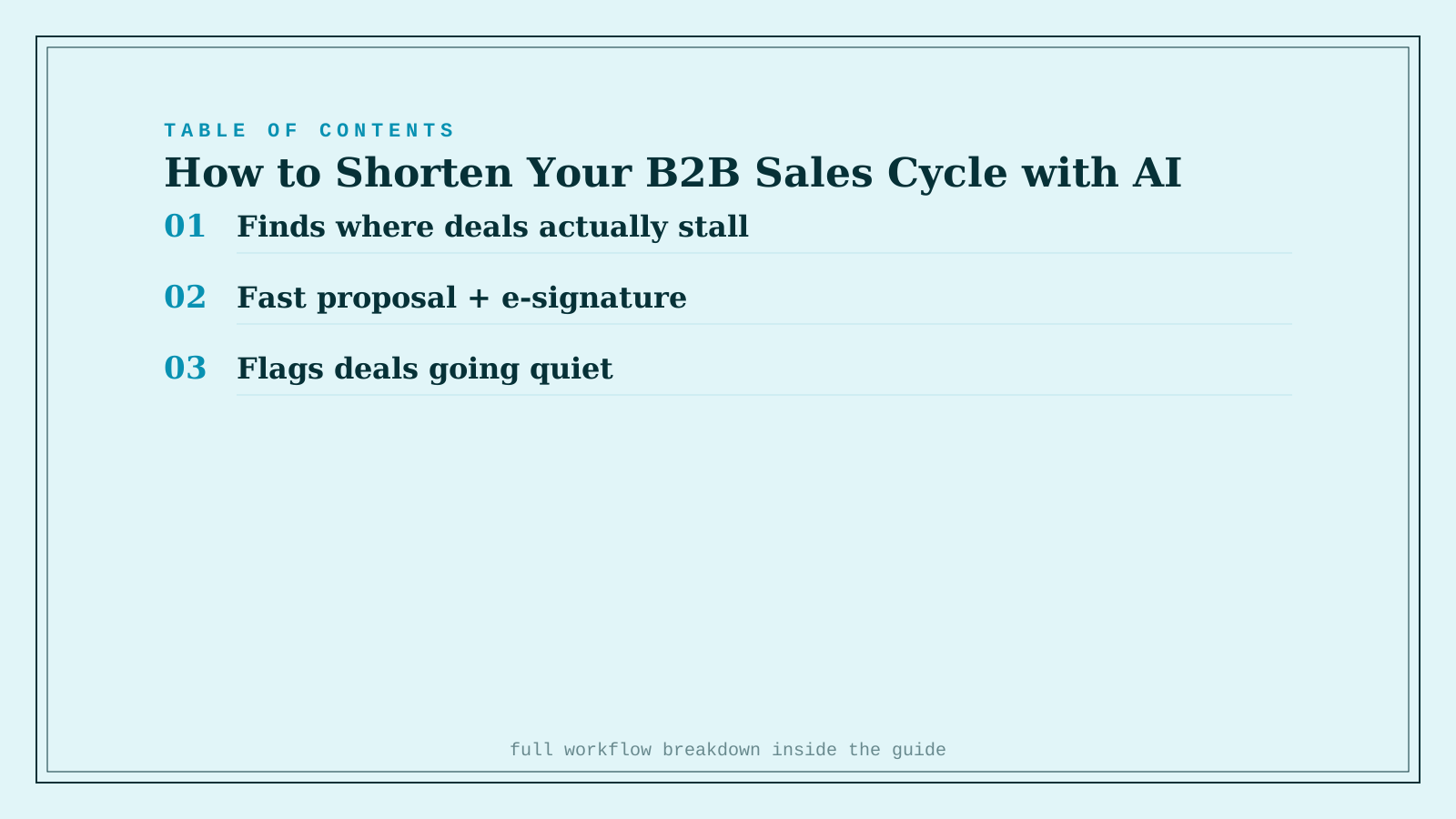
Quick comparison
| Tool | Role in the workflow | Starting price | Job |
|---|---|---|---|
| Gong | Finds where deals actually stall | Custom pricing | Diagnosing the real bottleneck, not guessing |
| PandaDoc | Fast proposal + e-signature | From $19/mo | Removing mechanical delay at the paperwork stage |
| HubSpot Breeze | Flags deals going quiet | Free tier; scales with Hub tier | Catching a stall early enough to fix it |
How to actually run this every quarter
Run the Gong stall-analysis at the start of each quarter, since where deals bottleneck can shift as your product, pricing, or market changes — a bottleneck you fixed last quarter isn't necessarily still the bottleneck now. Treat PandaDoc's proposal speed as a floor, not a ceiling — removing the mechanical delay doesn't fix a proposal that's wrong for the deal, which still needs a rep's judgment. Set a specific, short window (a week, not a month) for what counts as "gone quiet" in HubSpot Breeze, since too generous a threshold defeats the purpose of catching stalls early.
FAQ
Can these tools shorten a sales cycle that's long because of a genuinely complex buying process, not inefficiency? Partially — they remove avoidable, tool-fixable delay (paperwork speed, missed stall signals), but a genuinely complex enterprise buying process with many required stakeholders has structural length these tools can't shortcut, only make less wasteful within that structure.
Does Gong's stall-pattern analysis work with a small pipeline, or does it need volume? It needs a meaningful volume of recorded calls to surface reliable patterns rather than noise — a very small pipeline (a handful of deals a quarter) won't generate enough data for the pattern analysis to be trustworthy yet.
Is a fast proposal turnaround actually a major driver of sales-cycle length, or a minor one? It varies by business, which is exactly why Step 1 (finding your specific bottleneck via Gong) matters — for some sales motions, proposal speed is a real, meaningful chunk of total cycle time; for others, the bottleneck sits entirely elsewhere and PandaDoc's speed gain matters less.
What's a realistic reduction in sales-cycle length from this workflow? There's no universal number — the size of the improvement depends entirely on how much of your current cycle length is avoidable delay versus genuinely necessary buying-process time, which is specific to your business and worth measuring against your own baseline rather than an external benchmark.
Related guides
- Best AI Sales Pipeline Forecasting Tool in 2026
- Best AI Tool for Sales Call Analysis in 2026
- Part of our complete guide: AI Tools for Sales & Business Ops
- Explore Business & Sales tools
*Ratings and pricing reviewed monthly. Last updated September 2026.*
Bogdex · Founder & editor, woska
Bogdex builds and curates woska, testing AI tools against real workflows to judge which ones actually save time rather than which have the longest feature list.